The Backseat Used to Be Its Own Universe — Then We Gave Everyone a Screen
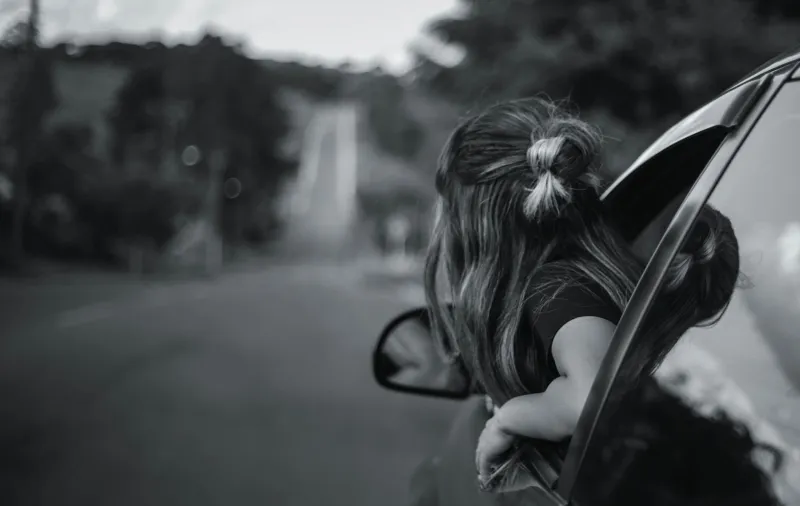
Somewhere on a highway in the summer of 1986, a family of five is three hours into a drive from Columbus to the Florida panhandle. The youngest kid has already asked how much longer approximately forty times. The middle child is reading a paperback with a flashlight even though it's two in the afternoon. The oldest has her headphones on, tuned to a Walkman, staring out the window at Georgia passing by in long green strips.
Nobody is watching anything. Nobody is particularly comfortable. And somehow, decades later, all three of them will remember that trip with a warmth that's hard to explain.
This is the paradox at the center of the American road trip's entertainment evolution. We solved the boredom problem. And in doing so, we may have changed what road trips actually are.
The Original Backseat Entertainment System
For most of the twentieth century, keeping kids occupied in a car was a creative challenge that fell entirely on the passengers themselves. Parents offered a few tools — a book, a coloring pad, maybe a travel-sized board game — but the bulk of the entertainment was self-generated.
License plate hunting was essentially a national pastime. Kids kept lists, competed to spot the most distant state, and felt a genuine thrill when Alaska or Hawaii appeared on a bumper somewhere in Tennessee. The alphabet game — finding each letter in sequence on signs, billboards, and storefronts — could eat up an hour of highway driving with almost no equipment required.
There were car-specific trivia games, the classic twenty questions format, storytelling chains where each person added a sentence to an evolving plot that usually ended in absurdity. There were also the less structured entertainments: watching thunderheads build over the plains, counting horses in fields, tracking the slow change in landscape as flat Midwestern farmland gave way to the foothills of the Appalachians.
None of this sounds particularly thrilling by modern standards. It wasn't always thrilling at the time, either. Boredom was a real and frequent companion on long drives. But boredom, it turns out, has a productive side — it pushes kids toward imagination, toward conversation, toward noticing the world outside the window.
The First Screens in the Car
The in-car DVD player arrived in American family vehicles in the late 1990s, initially as a luxury feature in higher-end minivans and SUVs. The flip-down screen mounted to the ceiling, the wireless headphones, the little bag of DVDs stuffed between the front seats — this was a genuine revolution for parents of young children.
The relief was immediate and real. Long drives that had previously required active parental management — mediating sibling arguments, answering the endless stream of questions, fielding complaints — became significantly calmer. Put on a movie, and the backseat went quiet. That quiet was not nothing. For parents navigating unfamiliar highways with a map on their lap, it was genuinely valuable.
But the dynamic in the car changed. The conversation stopped. The games stopped. The window-watching largely stopped. Kids who had been forced to engage with their environment — and with each other — were now absorbed in a shared screen, and then, as technology evolved, in individual ones.
The Tablet Era and the Fragmentation of the Backseat
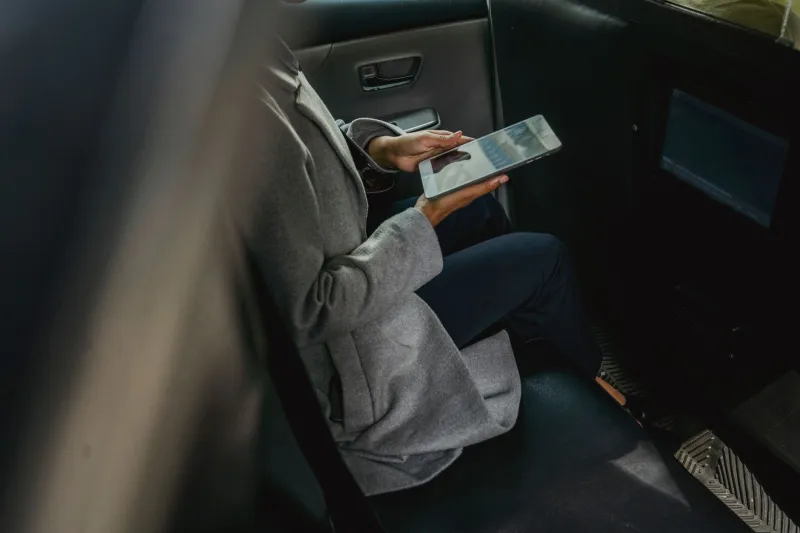
The iPad arrived in 2010 and changed the family road trip in ways that are still playing out. Suddenly, each child could have their own screen, their own content, their own entirely separate experience happening within the same moving vehicle. Streaming services made the content library effectively infinite. Noise-canceling headphones completed the isolation.
From a pure comfort standpoint, this is an enormous improvement over the old model. Kids aren't fighting over what to watch. Parents aren't fielding complaints. Everyone is entertained on their own terms. The drive passes quickly and without incident.
But here's what a lot of parents have quietly noticed: when the drive is over, there isn't much to talk about. Everyone experienced something different for six hours, and those experiences don't intersect. The shared memory of the trip — the thing that used to get built in real time through joint attention and collective boredom — doesn't form in quite the same way.
A family that watched the same movie together in the backseat, even on a ceiling-mounted screen, has a shared reference point. A family where everyone wore headphones and watched different content for six hours has four separate experiences that happened to occur in the same car.
What Boredom Was Actually Doing
Child development researchers have written extensively about the role of unstructured time in creative and social development. The specific context of a car — physically confined, moving through changing scenery, with limited options for distraction — turns out to be a surprisingly productive environment for the kind of open-ended thinking that screens tend to crowd out.
Kids staring out car windows aren't doing nothing. They're processing, imagining, noticing. The question "what do you think that farmhouse looks like inside?" or "where do you think that truck is going?" opens conversations that don't have a destination. Those conversations, repeated across hundreds of highway miles over the course of a childhood, build something — a shared vocabulary, a family culture, a habit of curiosity.
None of that is impossible with screens in the car. But it requires more deliberate effort now, because the default is individual absorption rather than collective engagement.
The Road Trip Hasn't Disappeared — It's Just Different
American families are still driving. Road trips are still happening. The highways are still full of minivans and SUVs pointed toward beaches and national parks and grandparents' houses. The trip itself hasn't gone anywhere.
What's changed is the texture of the experience. The negotiation over radio stations, the collective groaning at a bad pun from the front seat, the shared triumph of spotting a Wyoming plate in South Carolina — these small rituals are fading from the family road trip in the same quiet way that a lot of analog experiences have faded.
The screens solved a real problem. They made long drives easier for everyone. But easier and better aren't always the same thing, and somewhere between the license plate list and the noise-canceling headphones, the backseat stopped being a place where families accidentally made memories and became a place where everyone went somewhere else.
The highway is still out there. The question is whether anyone in the backseat is watching it go by.