Swipe, Confirm, Decline: How a Simple Fill-Up Became a Five-Minute Negotiation
There was a time when pulling into a gas station was one of the most uncomplicated things a driver could do. You stopped the car, handed a few bills through a window or set them on a counter, and drove away. The whole thing took maybe ninety seconds. Nobody asked for your zip code. Nobody offered you a rewards card. Nobody needed to know anything about you at all.
That world is almost entirely gone now. In its place stands something far more elaborate — a touchscreen terminal that greets you like a customer service representative who has been waiting specifically for you, and who has several questions before you go anywhere.
The Days When Cash Was the Whole System
Through the 1970s and into the 1980s, most American gas stations operated on a beautifully simple model. You pumped, or someone pumped for you, and then you paid. Cash was the assumed currency. The transaction left no trace, generated no data, and required no decisions beyond which grade of fuel you wanted — and even that was a pretty easy call for most drivers.
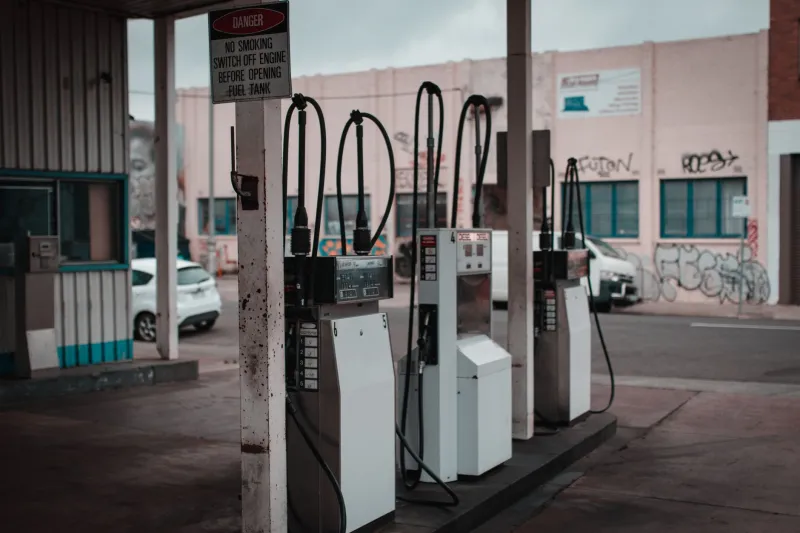
Credit cards existed, but using one at a gas station meant going inside and waiting while an attendant ran an imprinter across a carbon slip. It was slower than cash, not faster. Most people didn't bother. The pump itself was a mechanical device with a spinning dial and a satisfying metallic clunk when you replaced the nozzle. There was no screen. There was nothing to read.
The station owner knew roughly how much fuel he sold. He did not know who bought it, when they last visited, whether they preferred regular or premium, or what their email address was. That information simply didn't exist in any useful form, and nobody thought to collect it.
The Quiet Revolution at the Pump
The shift happened gradually, then all at once. Pay-at-the-pump technology arrived in the late 1980s and became widespread through the 1990s. The promise was pure convenience — no more walking inside, no more waiting in line behind someone buying lottery tickets and a hot dog. You could pay and go without interacting with another human being.
For a while, that's more or less what happened. You swiped a card, the pump authorized it, you fueled up, and the receipt printed. Simple enough.
But the screen kept growing. And the questions kept multiplying.
First came the zip code prompt, introduced as a fraud prevention measure. Then came the car wash offer. Then the loyalty program enrollment. Then the receipt preference — paper, email, or none? Then, somewhere along the way, the fuel grade confirmation screen, the rewards points balance display, the promotional offer you had to actively decline, and the survey asking whether your experience had been satisfactory.
At some point, the pump stopped being a pump and became an interface.
What the Screen Actually Wants From You
Here's something worth sitting with: every interaction at a modern gas pump is, at least in part, a data collection event. Your zip code ties your purchase to a geographic profile. Your loyalty card links your fueling habits to your name, your vehicle, your purchase history, and often your broader shopping behavior if the program is tied to a grocery chain or retail network — which many are.
The major fuel retailers know how often you fill up, how many gallons you typically buy, which locations you prefer, and whether you respond to promotional pricing. That information feeds algorithms that influence everything from pricing strategy to real estate decisions about where to build the next station.
None of this is secret. It's all disclosed somewhere in the terms and conditions that approximately nobody reads while standing at a pump in January.
The guy at the counter in 1974 knew your face if you were a regular. That was the extent of it.
The Loyalty Program Trap
American drivers have enthusiastically signed up for fuel rewards programs, and it's hard to blame them. The savings are real. Linking a grocery store loyalty card to a fuel program can knock twenty, thirty, even fifty cents off a gallon if you've been buying enough cereal and frozen dinners. Over a year, that adds up.
But there's a cost that doesn't show up on the receipt. The cost is participation in a system that is specifically designed to make you a predictable, trackable, returnable customer. The discount is the incentive. Your behavior data is the product.
This is not unique to gas stations, of course. It's the operating logic of most retail in 2024. But there's something particularly striking about it happening at a pump — a place where the transaction used to be so anonymous that the station didn't even need to know your name.
Convenience That Got More Complicated
The great irony of the modern gas pump is that it was designed to save time and has, in many ways, done the opposite. A quick fill-up now involves a decision tree that would have baffled a driver from 1985. Do you have the app? Did you enter your phone number? Is your card a debit or credit? Do you want the car wash? Are you sure you don't want the car wash?
For younger drivers who grew up with touchscreens, this probably feels normal. For anyone who remembers a different way, there's a lingering sense that something frictionless became very friction-y somewhere along the road.
The fuel itself hasn't changed that dramatically. You still pull up, you still pump, you still drive away. But the layer of technology wrapped around that basic act has thickened considerably — and it keeps getting thicker.
Somewhere between the spinning mechanical dial and the loyalty points summary, the gas station stopped being a pit stop and became a platform. Whether that's progress depends entirely on how you feel about being a data point.