When Your Car Kept Secrets: The Lost Era of the Mysterious Breakdown
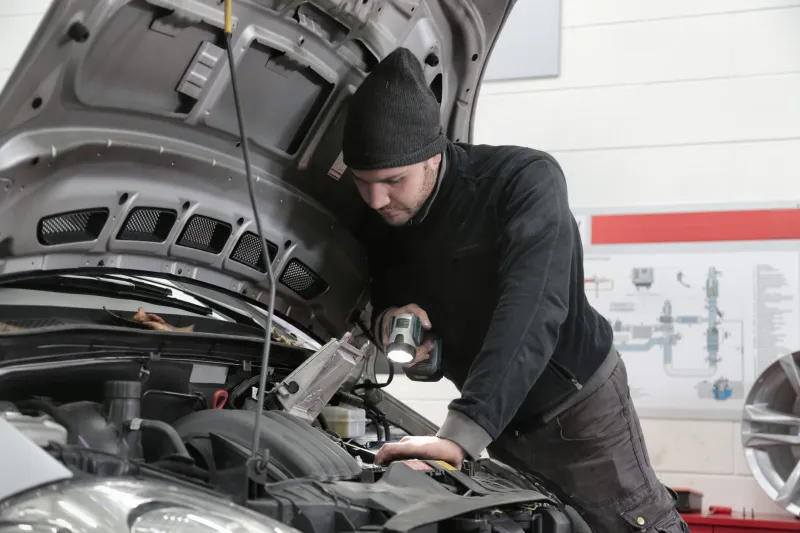
The car gave no warning. One morning it started fine. That afternoon, somewhere on I-80 between nowhere and nowhere, it didn't. You coasted to the shoulder, lifted the hood as if you knew what you were looking at, and stood there in the exhaust-scented air trying to diagnose something you had almost no tools to understand.
That scene played out millions of times across America for most of the twentieth century. It was frustrating, expensive, occasionally dangerous, and — in a way that's hard to articulate now — completely normal. Cars broke down. That was simply part of owning one.
Today, that version of car ownership is almost unrecognizable.
The Age of Mechanical Uncertainty
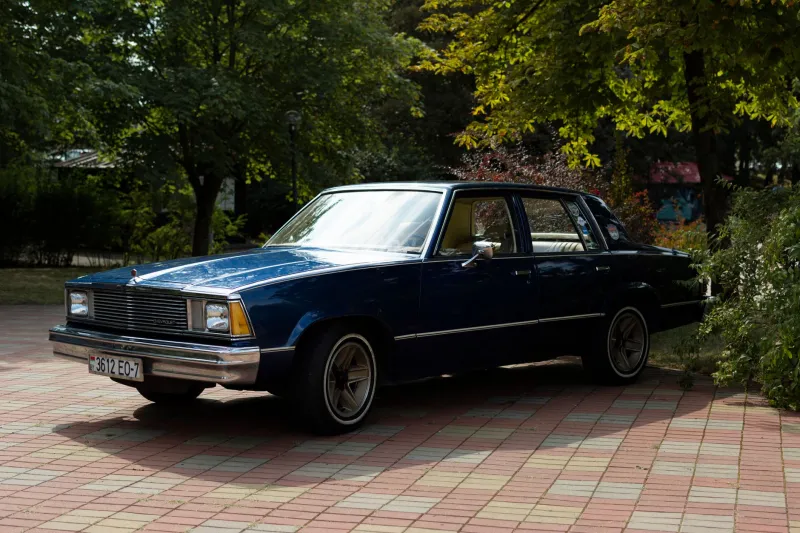
Vehicles built before the late 1980s were mechanical systems in the purest sense. Carburetors, distributor caps, timing belts, points and condensers — components that wore out on no particular schedule and failed without ceremony. There was no warning light telling you the water pump was about to go. There was no algorithm tracking your brake pad thickness. There was just the car, running or not running, and the gap between those two states was often a complete surprise.
Owners adapted by developing a kind of mechanical intuition. You learned your car's sounds. A rattle on the left front corner. A hesitation at highway speeds. A smell that appeared only when the engine was warm. These were signals, and experienced drivers learned to read them the way farmers read weather — imperfectly, but better than nothing.
The shade-tree mechanic emerged from this environment. This was the neighbor, the uncle, the guy three houses down who'd rebuilt enough engines to diagnose most problems by ear and feel. He had a set of tools, a creeper, and the kind of practical knowledge that came from decades of getting his hands dirty. His services were offered informally, usually for the cost of a six-pack and a Saturday afternoon.
For millions of American families, that person was the difference between an affordable repair and a crippling shop bill.
What the Diagnostic Revolution Changed
The shift began in earnest in 1996, when the federal government mandated OBD-II — a standardized onboard diagnostic system — in all new passenger vehicles sold in the United States. Every car built after that date had a standardized port under the dashboard that could communicate with diagnostic equipment, reading sensor data and generating fault codes that pointed mechanics toward specific problems.
It was a fundamental change in the relationship between driver and machine. For the first time, the car could tell you what was wrong with it.
That capability has expanded dramatically in the decades since. Modern vehicles monitor dozens of systems simultaneously — engine performance, transmission behavior, tire pressure, brake wear, battery health, emissions output. Warning lights that once meant only "something is wrong" now link to specific diagnostic codes that a technician can read in seconds. Some systems send alerts to your phone before you've even noticed a change in how the car drives.
Scheduled maintenance reminders have replaced the old guesswork entirely. Instead of trying to remember when you last changed the oil, the car tracks engine cycles and driving conditions and tells you when it's time. Instead of discovering your brakes were dangerously thin when they started grinding, sensors flag the wear before it becomes a safety issue.
The breakdown hasn't been eliminated — cars still fail — but it has become dramatically less random. Most mechanical failures today are either predicted in advance or traced to a specific cause within minutes of occurring.
The Death of the Backyard Mechanic
All of this has come at a cost that doesn't show up in reliability statistics.
Modern vehicles are extraordinarily complex. A current mid-size sedan contains tens of millions of lines of software code, dozens of electronic control units, and systems that interact with each other in ways that require specialized diagnostic equipment to untangle. The average home mechanic — even a skilled one — can change oil, replace filters, swap brake pads, and handle a handful of other basic tasks. Beyond that, the car has largely become a black box.
The shade-tree mechanic didn't retire. He was made obsolete.
This matters beyond nostalgia. The informal repair economy that once existed around mechanically literate neighbors and family members represented a genuine financial safety net for working-class households. A transmission problem that a knowledgeable friend could diagnose and fix for a few hundred dollars in parts now requires a dealer with proprietary software and certified technicians — and a bill that reflects all of it.
The democratization of car repair, such as it was, is largely gone. Replaced by a system that's more accurate, more reliable, and significantly more expensive to interact with.
The Psychology of Certainty
There's a quieter shift worth noting, too. When cars were unpredictable, drivers developed a different relationship with their vehicles. You paid attention. You listened. You noticed changes and responded to them. The car demanded a kind of ongoing engagement that modern vehicles simply don't require.
Today, drivers are largely passengers in their own maintenance experience. The car monitors itself. The dealer schedules the service. The alert fires when action is needed. It's efficient and largely stress-free — right up until something goes wrong that the system didn't predict, and the driver has no framework for understanding what just happened or why.
The mystery is gone. So is the knowledge that came from living inside it.
American car ownership used to be a relationship that required work from both sides. Now the car does most of the work. Whether that's progress depends entirely on what you think the relationship was for.