Crash, Buckle, Repeat: How the Simple Car Ride Became a Safety Certification Process
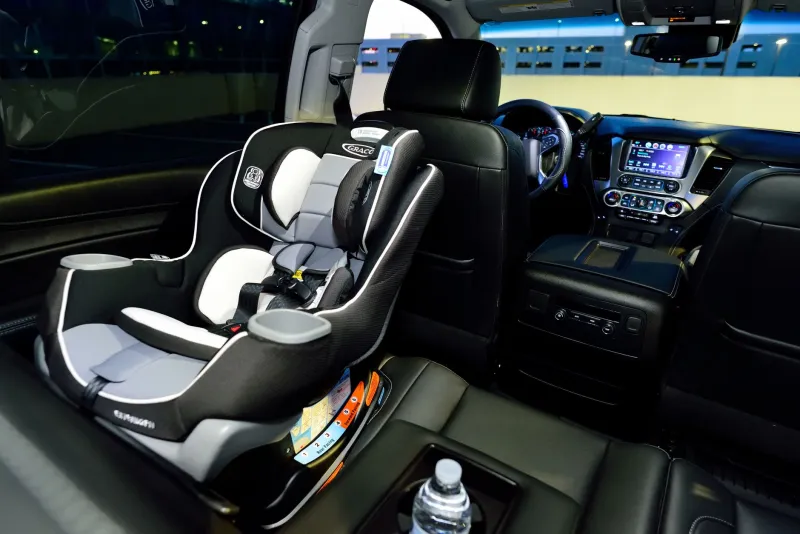
Somewhere in America right now, a parent is watching a YouTube tutorial on how to correctly install a convertible car seat. They are on their third attempt. The instruction manual is open on the kitchen floor. The car is in the driveway. The child is watching this unfold with the detached patience only toddlers and Buddhist monks seem capable of.
This is normal. This is Tuesday.
Go back fifty years and the same trip — parent, child, car — looked completely different. The kid climbed in, flopped across the back seat, and fell asleep somewhere around the first highway on-ramp. No harness. No mirror angled to monitor their breathing. No app tracking the cabin temperature. The car moved, the kid slept, everyone arrived.
Both versions of this story involve a parent who loves their child. What changed between them is almost everything else.
The Back Seat as Bedroom
For most of the 20th century, the back seat of an American car was essentially unsupervised territory. Children traveled in whatever position felt comfortable — lying down across the seat, curled against the door, sprawled on the floor if the seat was crowded. Seatbelts, when cars had them at all, were optional accessories that most adults ignored and most children never touched.
The earliest child car seats, which appeared in the 1930s and 1940s, weren't safety devices at all. They were booster seats designed to lift small children high enough to see out the window — essentially a bucket that hooked over the front seat back. Some had a small steering wheel attached so kids could pretend to drive. Safety wasn't the selling point. Entertainment was.
This wasn't negligence by the standards of the time. It was the standard of the time. Cars were slower on average, road networks were less congested, and the biomechanics of crash injury weren't yet understood in any practical way. Nobody had run the numbers on what happens to an unrestrained thirty-pound child in a 35 mph collision. When researchers eventually did, the results were hard to ignore.
The Science Catches Up
The turning point came in the late 1960s and early 1970s, when automotive safety research — pushed forward by advocates like Ralph Nader and backed by federal pressure — began generating data that was difficult to argue with. Children were dying in crashes at rates that better restraint systems could dramatically reduce. The evidence was clear. The political will, initially, was not.
The first federal safety standards for child restraints weren't established until 1971, and even then, enforcement was minimal and product quality was inconsistent. Early car seats met the technical definition of a restraint without necessarily performing well in real crashes. Consumer advocates spent years pushing for stricter testing standards, and the improvements came gradually through the 1980s.
State mandatory car seat laws followed a similar slow march. Tennessee passed the first one in 1978. By 1985, every state had some version of a child restraint requirement, though the specifics varied enormously. The patchwork of regulations took decades to consolidate into anything resembling a coherent national standard.
The Anxiety Escalation
Here's where the story gets more complicated. The safety improvements are real and the data is unambiguous — car seat use has saved thousands of children's lives and continues to do so. That part isn't up for debate.
But somewhere along the way, the practical goal of keeping children safe in crashes merged with a broader cultural shift in how Americans think about risk, parenting, and childhood itself. The car seat became less of a piece of safety equipment and more of a symbol of parental responsibility — and by extension, a measure of parental adequacy.
By the 2000s, the rules had grown significantly more complex. Rear-facing until a certain age and weight. Forward-facing with a harness after that. Booster seats until children reached height and weight thresholds that pushed the transition well into elementary school. Each revision was grounded in genuine safety research, but the cumulative effect was a system that required constant monitoring, regular equipment upgrades, and a level of technical literacy that left many parents perpetually uncertain whether they were doing it correctly.
And then came the checks. The hospital discharge check before you could take your newborn home. The fire station installation checks. The pediatrician's questions at every visit. The online forums where parents posted photos of their car seat installations for strangers to critique. The anxiety became its own ecosystem.
What Got Complicated Along the Way
The regulations created some genuinely strange situations. Children who were developmentally ready for booster seats were legally required to stay in five-point harness systems. Grandparents who watched children occasionally found themselves unable to comply with current standards using equipment they'd purchased only a few years earlier. Car seat expiration dates — yes, car seats expire — became a source of confusion and, for lower-income families, a real financial burden.
The second-hand market for car seats effectively collapsed because reselling a used seat meant potentially transferring unknown crash history and liability. A device that cost $300 new became disposable after a few years, regardless of its apparent condition. For families already stretched thin, that math was brutal.
The Tradeoff Nobody Fully Acknowledges
Children are measurably safer in cars today than they were in 1970. That is not a small thing. The reduction in pediatric traffic fatalities over the past five decades represents tens of thousands of children who are alive because of safety standards that didn't exist when their parents were kids.
But the backseat nap — that loose, unconscious, deeply comfortable surrender to motion that used to be a signature of American childhood — is gone. Not because children stopped needing rest on long drives, but because the environment that made it possible no longer exists.
Today's car ride is monitored, regulated, and optimized. It is also, for many families, mildly exhausting before the car even leaves the driveway. Whether that's a reasonable price for the safety gains is a question each generation answers differently. The current one has answered it clearly: buckle everything, check twice, drive carefully.
Somewhere in that answer is a lot of love. Somewhere in the old version was too.