The Phone That Was Bolted to the Wall and Saved Your Life: How Highway Communication Became Invisible
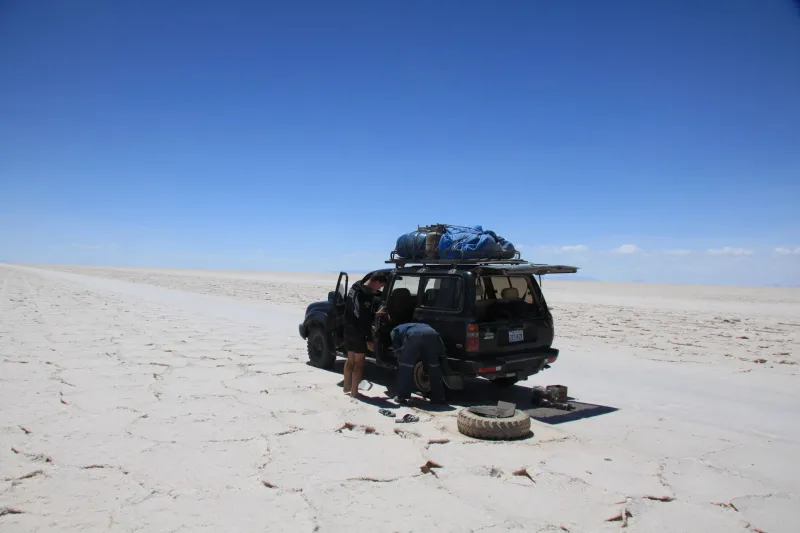
Picture it: somewhere on I-80 in Nevada, 1989. Your radiator hose has just given up. Steam is rising from the hood. You're on the shoulder of a four-lane highway with a station wagon full of luggage and a wife who is being extremely patient about this. The nearest town is eleven miles back.
You start walking. You're not panicking. You know, somewhere ahead or behind, there's a payphone. At a rest stop, a gas station, maybe bolted to a post at a highway junction. You'll find it. That's what you do.
This was not a crisis. This was Tuesday.
The Infrastructure Nobody Appreciated
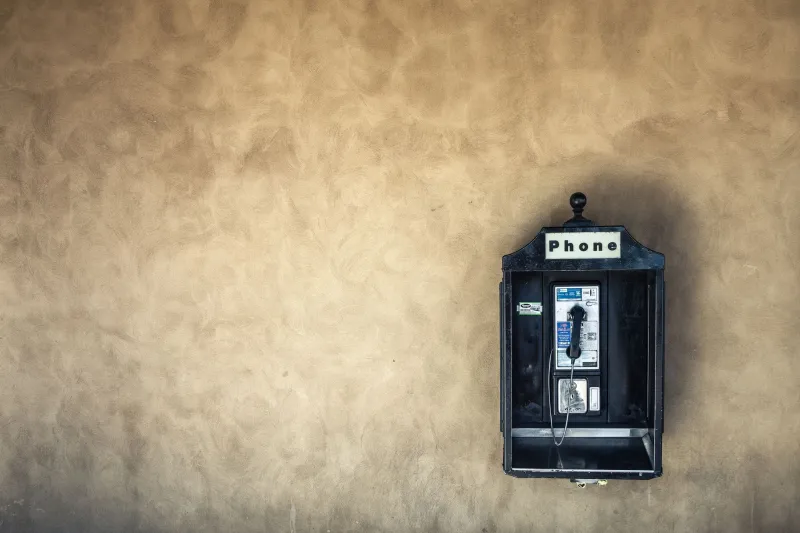
At their peak in the mid-1990s, there were roughly 2.6 million payphones operating in the United States. They were everywhere — gas stations, rest stops, truck stops, motel parking lots, highway on-ramps. In some rural stretches, a lone phone booth at a service plaza was the only communication link between civilization and a whole lot of empty road.
They cost a quarter for a local call. They were often dirty. The handset sometimes smelled like something you'd rather not think about. But they worked, and they were there, and their presence was a kind of silent social contract — a promise that if things went wrong, you were never completely alone.
Highway emergency call boxes reinforced this. Many state highway systems installed bright yellow or blue emergency phones every mile or so along major interstates, particularly in remote stretches. You didn't need money. You didn't need to know the number. You just picked it up and told someone where you were.
The whole system was visible, physical, and shared. It belonged to everyone because anyone might need it.
The Quiet Erasure
Cellular phones didn't kill the payphone all at once. The decline was gradual through the late 1990s and accelerated sharply after 2000. By 2018, the FCC reported fewer than 100,000 payphones remaining in the entire country — a drop of more than 96 percent in two decades. Today, finding a functional payphone in a rural area is less likely than finding a covered wagon.
The economics were simple and brutal. Once enough people had cell phones, fewer people used payphones. Once fewer people used them, maintaining them became unprofitable. Once they became unprofitable, they disappeared. The last one standing in New York City — once the payphone capital of America — was removed in 2022, replaced by a Wi-Fi kiosk that nobody particularly needed.
Highway emergency call boxes have fared slightly better in some states, but many have been quietly decommissioned as transportation departments concluded that essentially everyone now carries a phone. In California, which once had one of the most extensive call box networks in the country, the program has been scaled back significantly. The assumption is that you have a phone. The assumption is usually correct.
Usually.
The Anxiety We Traded For
Here's what changed in a way we didn't fully anticipate: the old anxiety and the new anxiety are not the same thing, and the new one might actually be worse.
In the payphone era, the fear was situational. You might get stranded. You might have to walk a mile to find a phone. That was a concrete, solvable problem with a clear resolution path. You found the phone. You made the call. You waited for help. The whole sequence was uncomfortable but manageable, and it ended.
The modern anxiety is constant and diffuse. It's the creeping dread that starts at 20 percent battery. It's the calculation you run in your head — if I use GPS the whole way, I'll be at eight percent by the time I get there — that happens automatically, without you deciding to do it. It's the low-grade panic of being in a dead zone, which feels like being cut off from the world in a way that standing on a highway shoulder in 1989 somehow didn't.
We replaced a world where communication was sometimes unavailable with a world where communication is always expected, and the gap between expectation and reality has become a new source of stress that simply didn't exist before.
A dead payphone was a broken machine. A dead smartphone is a personal emergency.
What Shared Infrastructure Actually Meant
The payphone wasn't just a communication device. It was a statement about public responsibility. It said: we, as a society, have decided that people should be able to call for help from a highway. We have paid for that. We have built it. It is here for you.
That logic — that emergency communication is a public good worth funding — has been quietly replaced by a different logic: everyone has a phone, so emergency communication is a private responsibility. Carry your charger. Keep your plan paid up. Manage your battery. If you don't, that's on you.
This is mostly fine. Most people, most of the time, have a charged phone. But the shift in responsibility is real, and it happened without anyone really voting on it. The infrastructure just disappeared, and the assumption that you'd covered your own bases moved in to fill the space.
The Call Box as Cultural Artifact
If you drive certain stretches of older interstate highway, you can still spot the ghosts of the old system — faded posts where call boxes used to hang, concrete pads where phone booths once stood, the outline of a sign that used to direct drivers toward emergency services.
They're archaeological now. Markers of a time when the highway was understood to be a place where things could go wrong, and where someone had thought ahead about that possibility and built something physical in response.
The next time your phone battery drops to fifteen percent on a long drive through somewhere without a signal, and you feel that specific modern flutter in your chest — that's not a new fear. That's an old fear wearing different clothes. The highway was always a little unpredictable. We just used to have a quarter and a plan.