Keys, Tips, and Total Trust: The Forgotten World of Everyday Valet Parking
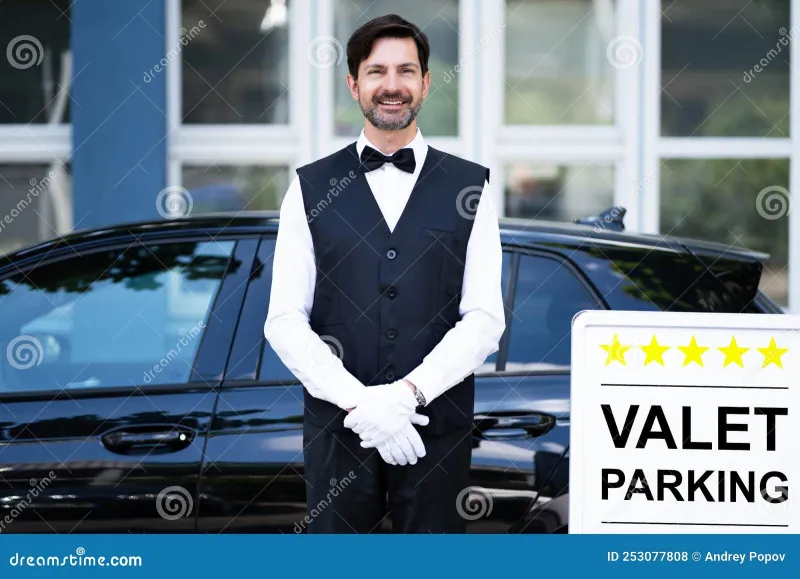
Photo: vintage 1950s valet parking attendant red jacket hotel entrance, via thumbs.dreamstime.com
Somewhere in a shoebox of family photos, there's probably a picture of your grandparents dressed up for a night out — him in a sport coat, her in something with a brooch — standing outside a restaurant or department store while a young man in a red jacket reaches for the car keys. Nobody in the photo thinks anything of it. This is just how things worked.
The valet wasn't a luxury. He was practically furniture.
When Parking Was a Service Industry
At the height of American valet culture — roughly the 1940s through the late 1970s — handing your car keys to a stranger and walking away without a second thought was a perfectly normal part of a night out, a shopping trip, or a hotel check-in. Department stores in cities like Chicago, Dallas, and Los Angeles offered curbside valet as a customer convenience. Drive up, hand over your keys, shop for two hours, come back to a car waiting exactly where you wanted it. No circling the block. No parking garage ramps. No quarter-fed meters.
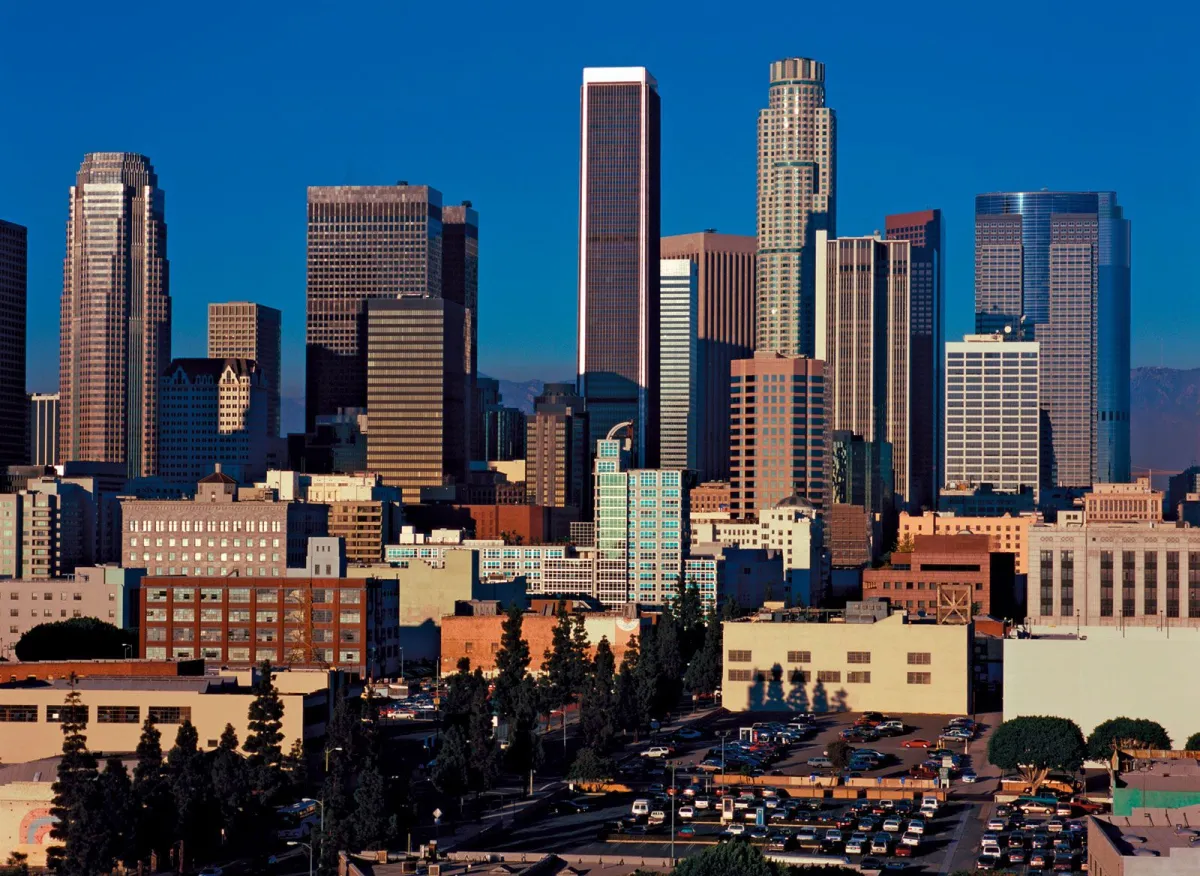 Photo: Los Angeles, via cdn.britannica.com
Movie theaters in upscale suburban markets offered it too. You'd pull up to the Bijou on a Friday night, give the kid your keys for fifty cents, and walk straight in without missing the opening credits. Hotels considered it a baseline amenity, not an upsell.
And the workforce behind it was enormous. Valet parking employed tens of thousands of young men — it was almost exclusively men — across the country. Many were college students or recent graduates working evenings and weekends. The tips could be surprisingly good. The work was physical, fast-paced, and demanded a certain kind of spatial confidence: you had to be comfortable driving anything, parking it in tight spots, and doing it quickly.
The Craft Nobody Talks About
Here's something that gets lost in the nostalgia: valet parking was genuinely skilled work.
Not every car handles the same. A mid-1960s Cadillac DeVille is a completely different animal than a Volkswagen Beetle. Knowing how to back a full-size American sedan into a tight spot without touching the bumpers on either side — in the dark, in the rain, on a schedule — took real practice. Good valets developed a feel for unfamiliar vehicles almost instantly. They had to.
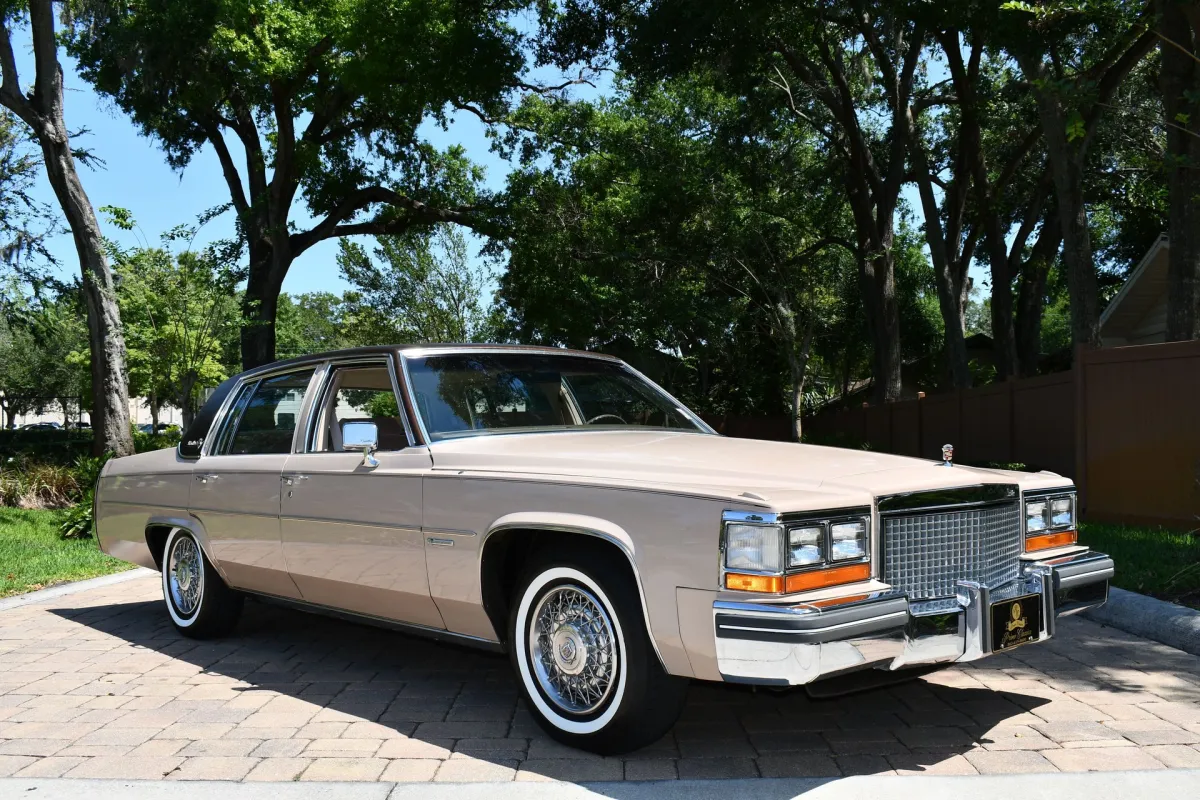 Photo: Cadillac DeVille, via cdn.dealeraccelerate.com
There was also the memory work. Before digital ticketing systems, a valet stand might be tracking hundreds of cars across a multi-level lot using a paper system and muscle memory. Getting the wrong car to the wrong customer wasn't just embarrassing — it was a career-ending kind of mistake.
And then there was the trust dimension. You were handing a stranger your car. Not just any possession — your car, which in mid-century America represented a significant financial investment and a considerable piece of your personal identity. The transaction was built entirely on institutional trust: the valet stand's reputation, the establishment's accountability, and a social contract that said this is how things are done here.
What Started Killing It
Several forces converged to quietly dismantle the everyday valet economy, and none of them happened overnight.
The self-parking garage was the first major disruption. As American cities and suburbs built more structured parking infrastructure through the 1960s and 70s, the logistical argument for valet — that there simply wasn't enough accessible parking nearby — weakened. If a department store could build a four-story garage attached to the building, why pay a team of valets?
Liability concerns grew louder through the same period. Insurance companies became increasingly nervous about the exposure created when employees drove customer vehicles. One fender bender in a parking structure could turn into a complicated legal situation. As litigation culture expanded in America, the risk calculus shifted.
Car culture itself changed too. By the 1980s, Americans had developed a more possessive, personal relationship with their vehicles. The car wasn't just transportation — it was an extension of identity, often loaded with personal items, custom stereos, and the general disorder of daily life. Handing it to a stranger felt increasingly uncomfortable in a way it simply hadn't a generation earlier.
What Survived, and What It Became
Valet parking didn't disappear entirely — it just retreated upmarket.
Today, it's a signal of luxury rather than a standard convenience. Fine dining restaurants, five-star hotels, and high-end event venues still offer it, and in those contexts it carries a deliberate air of exclusivity. The red jacket still exists. The practiced jog to the car still happens. But the transaction now carries a different meaning: you are somewhere special, and this is how special places treat you.
That's a significant cultural shift from the days when the valet at Neiman Marcus was just part of the Tuesday afternoon shopping experience.
In some cities — Los Angeles especially — valet culture has proven more resilient, partly because the parking problem never really went away. But even there, the profession has contracted. Automated parking structures, rideshare drop-offs, and the general reluctance of modern Americans to hand their keys to anyone have all taken their toll.
A Small Window Into Something Larger
The rise and fall of everyday valet parking is, in its own quiet way, a surprisingly revealing story about American attitudes toward cars, class, convenience, and trust.
There was a version of America where it felt completely natural to treat your car as something requiring professional handling — where the idea of parking it yourself at a nice restaurant would have seemed almost strange, like insisting on carrying your own luggage through a hotel lobby.
That version of America is gone. We park our own cars now, often guided by a camera that shows us exactly how much space we have behind us. We'd never hand our keys to a stranger without a second thought.
But somewhere in that shoebox of family photos, a kid in a red jacket is still reaching out his hand. And your grandparents, dressed up for the evening, are handing the keys over without hesitation.
That's how much things have changed.