Your Car Updated Itself While You Slept: 7 Things That Would Break a 1974 Driver's Brain
Photo: Internet Archive Book Images, No restrictions, via Wikimedia Commons
Imagine a driver from 1974 materializing in your driveway tomorrow morning. He's got a paper registration in the glovebox, a key ring with actual keys, and a healthy fear of the check engine light. Now watch him observe your morning routine. Every single step of it would sound like a hoax.
The wildest part? You do these things without thinking. The revolution happened so quietly that nobody threw a party. Let's walk through seven modern car habits, old way versus new, and appreciate just how far the everyday drive has traveled.
1. Starting the Car From Bed
1974: Go out in the cold, put the key in, pump the gas pedal just right, and hope the choke does its job. Bonus points for scraping ice with a spatula.
Now: You tap a phone app under the blankets. The car starts, the cabin heats up, the defrosters run, and by the time you step outside, it's 72 degrees inside the vehicle. A 1974 driver would assume witchcraft. We call it Tuesday.
2. Updating the Car Overnight
1974: Your car was frozen at the moment of purchase. If it had a flaw, that flaw was yours for life — or yours until a recall letter arrived by mail.
Now: Tesla, and increasingly everyone else, pushes over-the-air software updates while you sleep. Your car genuinely gets new features, faster acceleration, and bug fixes via Wi-Fi. Imagine telling a '70s owner their carburetor would improve itself by Tuesday.
3. Letting the Car Park Itself
1974: Parallel parking was a public performance. You cranked the wheel, backed in blind, and accepted the judgment of anyone watching.
Now: Ultrasonic sensors scan the gap, the steering wheel turns itself, and you mostly supervise. Some cars will even come to you from a parking spot. The parallel park — a genuine point of pride for generations — is quietly becoming a skill like cursive.
4. Braking That Gives You Money Back
1974: Braking converted gasoline into heat, full stop. Waste was the design.
Now: In an EV or hybrid, lifting off the pedal slows the car and recharges the battery. Every stoplight is a tiny refuel. Regenerative braking would require a 15-minute explanation and even then, a 1974 driver wouldn't believe it.
5. Never Touching a Gas Pump
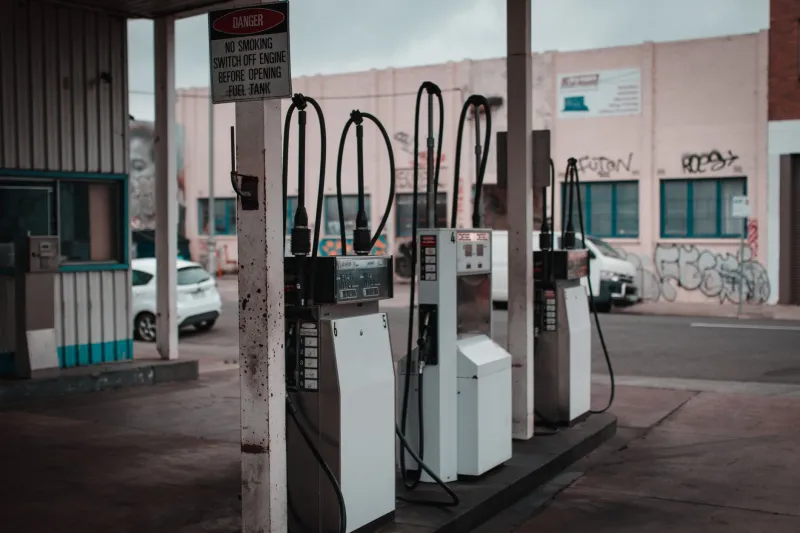
1974: Weekly ritual: pull in, breathe the fumes, check the oil, maybe squeegee the windshield. Gas stations were a second home.
Now: Millions of EV owners 'refuel' in their garage every night and haven't visited a gas station in years. The entire chore — the smells, the squeegee, the quarters for air — has simply evaporated for a growing share of American drivers.
6. Getting Directions From the Dashboard's Voice
1974: You planned the route with a paper map before leaving, and if you missed an exit, you found a gas station and asked a human.
Now: The car reroutes around traffic in real time, announces your exit, and finds a charger or coffee stop on request. The single biggest source of family-car arguments — navigation — has been automated into silence.
7. A Car That Calls for Help
1974: A breakdown on a rural highway meant walking, waiting, or trusting the kindness of whoever stopped.
Now: Automatic crash detection senses the impact and alerts emergency services with your location, even if you're unconscious. The most feared moment of 1974 motoring — being stranded and alone — has been engineered nearly out of existence.
The Revolution Nobody Noticed
Stack all seven together and the pattern is clear: the car went from a mechanical object you serviced and feared to a connected device that serves you. A 1974 driver handed the keys to your car would need a tutorial. Hand your keys to him, and you'd need to explain less than half of what happens on a normal commute.
Progress this smooth is easy to miss. Which is exactly why it's worth writing down — before 'then' fades entirely and 'now' starts feeling like it was always this way.