Stickers, Stories, and the Slow Disappearance of the American Car as Personal Statement
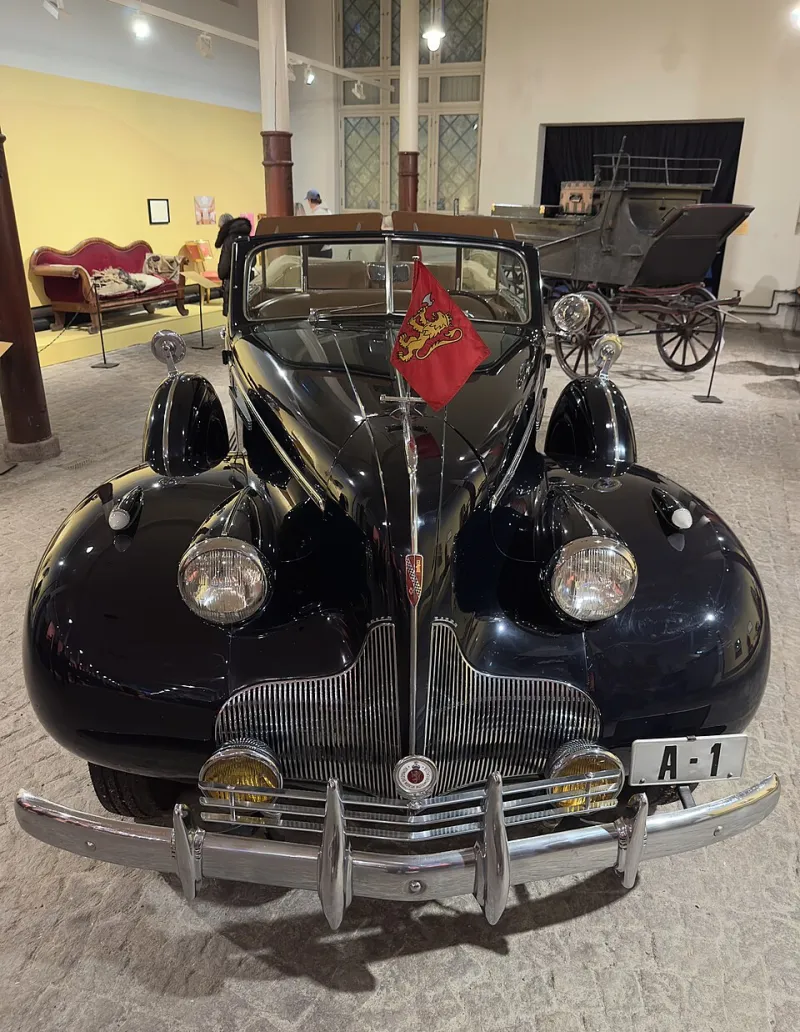
Photo: Wolfmann, CC BY-SA 4.0, via Wikimedia Commons
Pull into any parking lot in America today and look at the bumpers. Mostly blank. Maybe a dealer badge that the owner never bothered to remove. Perhaps an oval sticker with a beach town abbreviation, if you're near the coast. The occasional political declaration, usually aggressive enough to make you look away quickly.
Now try to remember what parking lots looked like in 1983. The backs of cars were covered. Campgrounds. State parks. Radio stations. Local diners. High school sports teams. Causes, jokes, hometowns, opinions. The bumper was a bulletin board, and Americans were enthusiastic contributors.
Something erased all of that. The story of how it happened is more interesting than it might seem.
The Golden Age of the Adhesive Autobiography
Bumper stickers as a commercial product emerged in the late 1940s, invented by a Kansas City silk-screen printer named Forest Gill who figured out how to put adhesive on the back of a fluorescent sign. By the 1950s, political campaigns had discovered them. By the 1960s, they were everywhere — and not just for politics.
The 1970s and 1980s were the peak era of the truly personal bumper sticker. These weren't mass-produced political slogans. They were specific. They told you that the driver had been to Yellowstone, had eaten at Stuckey's somewhere on I-75, had a kid on the honor roll at Jefferson Elementary, and probably had a strong opinion about something that happened locally. Reading the back of someone's car was like reading a compressed life story.
RV culture contributed enormously to this. Retired couples who spent their summers driving around the country collected stickers from every campground and national park they visited. By the end of a summer, the back of the camper was a geographic record of everywhere they'd been — a physical itinerary that anyone behind them at a red light could read and admire. People struck up conversations in rest stops based entirely on shared sticker collections. "Oh, you've been to Crater Lake? We were there in '79."
 Photo: Crater Lake, via www.travelandleisure.com
Regional identity was a huge driver. Local diners, drive-ins, county fairs, minor league baseball teams — these were the kinds of places that printed stickers as a marketing tool, and people put them on their cars with genuine pride. Your bumper advertised your specific corner of America to everyone you passed on the highway.
When the Joke Was Enough
Not every sticker was a declaration. A significant percentage of the bumper sticker culture of that era was just playful. "My other car is a broom." "Honk if you love peace and quiet." "I brake for hallucinations." These weren't political. They weren't divisive. They were small, dumb jokes designed to get a smile from the driver behind you at a stoplight.
This category of sticker reflected something about how Americans related to strangers in public spaces at the time. There was an assumption that the person behind you in traffic was basically a neutral party — someone you could share a mild joke with through the medium of adhesive vinyl. The road was a shared space, and bumper stickers were one of the ways people acknowledged each other across that space without actually interacting.
The humor was often regional, often self-deprecating, and almost never designed to exclude anyone. A sticker that said "Lubbock: It's Not the End of the World, But You Can See It From Here" was only funny if you knew where Lubbock was — but it wasn't trying to make anyone angry. It was an inside joke extended generously to anyone who happened to be driving behind you.
How Politics Changed the Conversation
Political bumper stickers have existed as long as bumper stickers themselves — presidential campaigns were early adopters. But for most of the medium's history, political stickers coexisted with the campground stickers and the joke stickers without dominating the landscape.
That balance shifted noticeably through the 1990s and accelerated through the 2000s. As American political culture became more sorted — more tribal, more binary, more emotionally charged — the bumper sticker became a primary vehicle for that sorting. Stickers got longer, angrier, and more pointed. The jokes got edgier. The political declarations got more confrontational.
By the early 2010s, the bumper of a politically engaged American car was often a challenge rather than an invitation. "Read the sticker. Know where I stand. Disagree if you want." The implied conversation had shifted from "here's something funny about where I've been" to "here's something you might find uncomfortable about what I believe."
The result was predictable: a lot of people stopped putting stickers on their cars entirely. If the medium had become associated with conflict, why participate? The campground sticker and the diner sticker and the county fair sticker quietly retreated, leaving the field to the declarations.
The Economics of Blank Bumpers
Politics wasn't the only force clearing the bumpers. Economics played a significant role, and it operated on a very practical level.
The shift toward leased vehicles changed the calculus completely. When you lease a car, you're contractually obligated to return it in acceptable condition — and a bumper covered in stickers is not acceptable condition. Lease agreements created a financial incentive to keep the car's exterior pristine, which meant no stickers, no decals, no personalization of any kind.
Even among buyers, resale value anxiety became a real factor. As car prices climbed and the used-car market became more professionalized, owners started thinking about their vehicle as an asset to be preserved. A sticker that leaves adhesive residue, or pulls paint when removed, or simply signals a previous owner's taste to a potential buyer — that's a liability. The car stopped being a personal canvas and became an investment to protect.
The rise of leasing is worth emphasizing: in the early 1980s, leasing accounted for a small fraction of new vehicle transactions. By the 2010s, it represented roughly thirty percent of new car deals. That's a lot of bumpers that became legally off-limits for self-expression.
What the Blank Bumper Reveals
Look at a parking lot full of modern cars and you're looking at a particular kind of American moment. The vehicles are overwhelmingly white, gray, black, or silver — a color palette that essentially didn't exist in American automotive culture before the 1990s. The bumpers are clean. The windows are unadorned. Each car looks more or less like every other car.
There's efficiency in that uniformity. Resale is easier. Leases are returned without penalty. Nobody is offended by your sticker collection at a stoplight.
But something that was genuinely interesting about American car culture has quietly drained away. The bumper sticker was a low-stakes form of public self-expression — a way of saying "here's who I am and what I care about" to strangers you'd never meet. At its best, it was curious and warm and funny and specific. It told you something real about the person driving the car in front of you.
Now you mostly just see the manufacturer's logo and a backup camera sensor.
The road is quieter for it. Not better. Just quieter.