From Driving Gloves to Digital Dashboards: How Car Interiors Became Spaceships
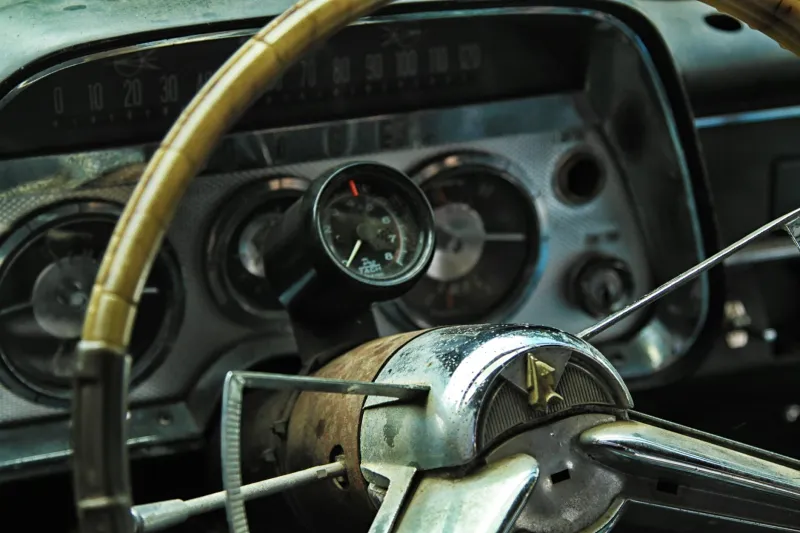
Open the glove compartment of a 1955 Chevrolet Bel Air and you'd likely find exactly what the name suggests: a pair of driving gloves, maybe some leather ones for winter and lighter cotton versions for summer. Fast-forward to today, and that same compartment might contain a smartphone charger, hand sanitizer, and registration documents stored on a USB drive — while the dashboard itself has transformed into something that would look more at home on the bridge of the starship Enterprise.
 Photo: starship Enterprise, via www.wildlife-media.at
When Simple Was Actually Simple
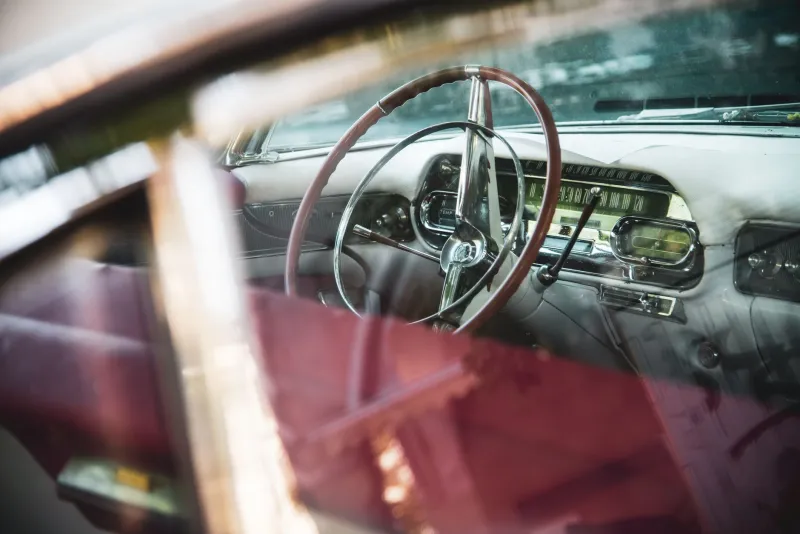
The car interiors of the 1950s and 1960s operated on a philosophy of beautiful simplicity. Your dashboard featured perhaps a half-dozen gauges: speedometer, fuel gauge, oil pressure, water temperature, and maybe an ammeter if you were lucky. The radio, if your car had one, offered AM reception and three or four preset buttons that you'd tune to whatever stations you could pick up in your area.
Seating was straightforward — bench seats in front and back, upholstered in vinyl or cloth, with manual adjustment via a lever under the seat. Climate control meant rolling down the windows or, in more expensive cars, turning on a heater that drew warm air from the engine. Air conditioning was a luxury option that fewer than 10% of cars offered before 1960.
The glove compartment really did contain gloves because driving was still considered a somewhat formal activity. Well-dressed drivers wore gloves to protect their hands from the steering wheel and to maintain a proper grip. Maps were essential equipment — folded paper atlases that every responsible driver kept handy for navigation.
The Gradual Invasion of Convenience
The 1970s marked the beginning of the great interior complexity explosion. Cars began sprouting new features at an accelerating pace: power windows, power locks, cruise control, and increasingly sophisticated stereo systems. The dashboard started growing additional switches, buttons, and warning lights for features that previous generations of drivers had never imagined needing.
By the 1980s, digital displays began appearing — first simple LED readouts for clocks and radio stations, then more complex information centers showing fuel economy, outside temperature, and maintenance reminders. The car was beginning its transformation from a purely mechanical device into an electronic one.
Cup holders, now considered essential, didn't become standard until the 1980s. Before then, drinking anything while driving was considered poor form and potentially dangerous. The rise of drive-through restaurants and commuter culture changed that assumption permanently.
The Computer Revolution Comes to Detroit
The 1990s brought the real technological revolution to car interiors. Electronic fuel injection replaced carburetors, requiring computer-controlled systems that needed their own dashboard indicators. Anti-lock braking systems, airbags, and traction control all demanded new warning lights and status displays.
CD players replaced cassette decks, which had replaced 8-track players, which had replaced AM radio. Each generation of audio technology brought new complexity and new opportunities for things to break down. The simple radio knobs of the 1960s evolved into multi-function control systems that required actual study to master.
Power everything became the norm: power seats with memory settings, power mirrors, power steering, and power windows that could be controlled from a master switch panel that looked like mission control.
The Smartphone Changes Everything
The introduction of the iPhone in 2007 fundamentally altered what Americans expected from their car interiors. Suddenly, the primitive displays and limited functionality of even high-end automotive electronics looked ancient compared to the device in your pocket.
Automakers responded by essentially turning the dashboard into a giant smartphone. Touchscreen displays began replacing physical buttons and knobs, consolidating climate control, navigation, entertainment, and vehicle settings into software interfaces that could be updated and customized.
Bluetooth connectivity, USB ports, and wireless charging pads became standard equipment. The modern car interior assumes you'll be traveling with multiple electronic devices that all need power and connectivity.
Today's Rolling Command Centers
Sit in a 2024 luxury vehicle and you're surrounded by more computing power than NASA used to put humans on the moon. The dashboard might feature a 12-inch touchscreen for infotainment, a digital instrument cluster that can display anything from traditional gauges to full-color maps, and ambient lighting that adjusts automatically based on time of day.
Voice commands can control everything from navigation to climate settings to phone calls. The car knows your preferred seat position, mirror settings, and radio stations, adjusting everything automatically when it recognizes your key fob or smartphone. Some vehicles can even start themselves remotely, pre-cooling or pre-heating the interior before you arrive.
The glove compartment, meanwhile, has become a catch-all storage space for the electronic detritus of modern life: charging cables, screen wipes, and backup phone batteries. Actual gloves are as rare as paper maps.
The Price of Progress
All this technology comes with trade-offs that drivers from earlier eras never had to consider. Modern car interiors require regular software updates, can suffer from system crashes, and often need rebooting like any other computer. Simple tasks like adjusting the temperature might now require navigating through multiple touchscreen menus instead of turning a physical knob.
Repair costs have skyrocketed as mechanical systems gave way to electronic ones. Replacing a broken radio in a 1970 Camaro might cost $50; replacing the integrated infotainment system in a modern car can run thousands of dollars.
Many drivers also report feeling overwhelmed by the sheer number of options and settings available in modern vehicles. The simple pleasure of getting in your car and driving has been replaced by the need to configure, connect, and customize before you can even leave the driveway.
Looking Back, Moving Forward
The transformation of car interiors from simple mechanical spaces to sophisticated electronic environments represents one of the most dramatic technological shifts in everyday American life. In just seventy years, we've gone from cars with three gauges and an AM radio to vehicles that can park themselves, navigate traffic autonomously, and provide internet connectivity for passengers.
Whether this represents progress or complication depends largely on your perspective. The modern car interior offers unprecedented convenience, safety, and entertainment options. But it also represents a level of complexity that would have seemed absurd — and probably unwelcome — to drivers who were perfectly happy with a speedometer, a gas gauge, and a good pair of driving gloves.
The next time you reach for your glove compartment and find it filled with USB cables instead of actual gloves, take a moment to appreciate just how far we've traveled from the days when driving was a simple matter of getting from point A to point B without any electronic assistance whatsoever.