Fill 'Er Up With Whatever That Was: America's Long, Strange Road From Leaded Gas to the Pump You Barely Think About
Fill 'Er Up With Whatever That Was: America's Long, Strange Road From Leaded Gas to the Pump You Barely Think About
Next time you pull into a gas station, take a second to notice how routine the whole thing feels. You tap your card, pick your grade, squeeze the handle, and stare at your phone for three minutes. The fuel going into your tank is clean, standardized, federally regulated, and almost certainly the same product you got last week at a completely different station in a different state.
It wasn't always like this. Not even close.
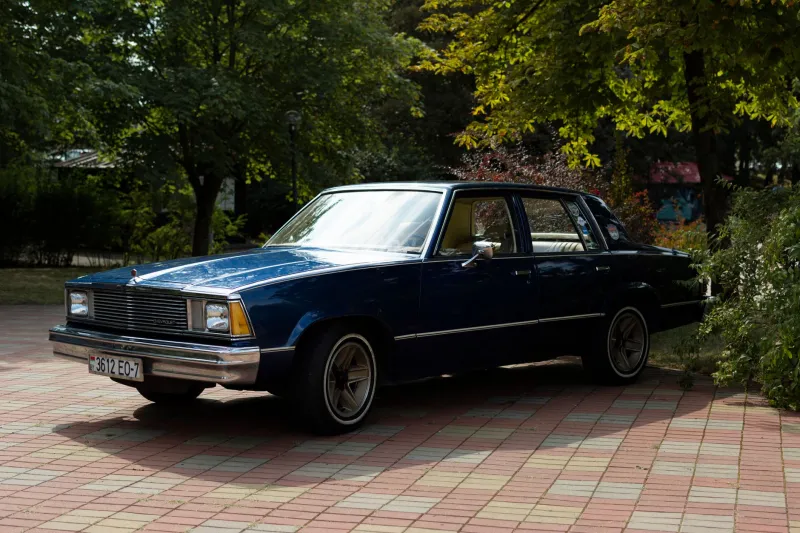
For much of the twentieth century, fueling your car in America involved choices that were genuinely confusing, a product that was quietly poisoning the population, and a whole set of social rituals that have since vanished entirely. The story of how American fuel got from there to here is stranger than most people realize.
What Was Actually in That Gas
Tetraethyl lead was added to gasoline starting in the early 1920s, and for the next five decades, it was a standard ingredient in most of the fuel sold in the United States. The reason was practical: lead acted as an octane booster and a lubricant for engine valves, allowing higher-compression engines to run more smoothly without knocking. It was cheap, it was effective, and the automotive and petroleum industries embraced it enthusiastically.
The fact that it was also a potent neurotoxin was, for a remarkably long time, treated as a secondary concern.
The health risks of lead had been documented since antiquity. Workers at the first tetraethyl lead production plants in the 1920s experienced hallucinations, seizures, and death. Researchers raised alarms. The industry pushed back, funded its own studies, and kept the product on the market. For fifty years, Americans drove cars that expelled lead particles through their exhaust pipes into the air of every city, suburb, and highway in the country. Children who grew up near busy roads absorbed elevated levels of lead. Blood lead levels across the US population were significantly higher than they are today, with measurable effects on cognitive development that researchers are still quantifying.
Nobody at the pump knew any of this. You pulled in, asked for regular or ethyl — "ethyl" being the industry's cheerful brand name for the leaded premium grade — and drove away.
The Attendant Made the Call
In the full-service era, you often didn't even make the fuel decision yourself. You'd pull into the station, tell the attendant to fill it up, and he'd reach for whichever nozzle he thought was appropriate for your car. If you drove something older and basic, that was regular. If you drove something newer or higher-performance, he might go for the premium without being asked.
Most drivers had only a vague understanding of what the grades actually meant. Regular was cheaper. Premium was for nicer cars. That was roughly the extent of the popular knowledge. The attendant, who had been pumping gas all day and had a working familiarity with what different engines needed, was often making a more informed call than the owner of the vehicle.
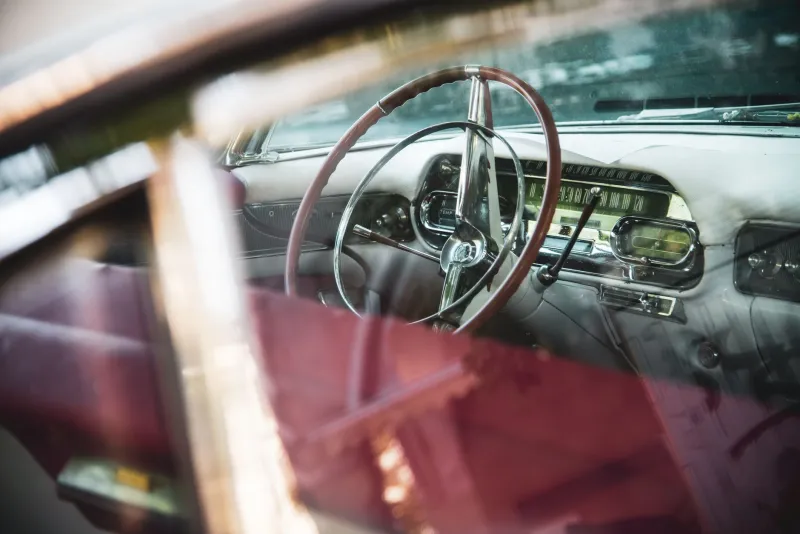
This wasn't unusual for the era. Cars were complicated machines that most owners didn't fully understand, and the service station ecosystem — attendants, mechanics, the guy who checked your oil without being asked — existed partly to bridge that knowledge gap. You trusted the people who worked with cars all day to know things you didn't.
The Phase-Out That Took Two Decades
The Clean Air Act of 1970 set the process in motion. The newly formed Environmental Protection Agency began requiring that new cars be equipped with catalytic converters, which were immediately poisoned by leaded fuel. Unleaded gasoline had to be made available at stations by 1974 to serve these new vehicles.
 Photo: Clean Air Act, via i.pinimg.com
For a while, both products coexisted at the pump. New cars got unleaded. Older cars kept running on leaded. Stations carried both. The transition was gradual, piecemeal, and occasionally confusing — there were documented cases of drivers accidentally filling new catalytic-converter-equipped cars with leaded fuel, damaging the converters and partially defeating the purpose of the regulation.
The EPA tightened lead content limits progressively through the late 1970s and 1980s. Leaded gasoline for on-road vehicles was finally banned entirely in the United States in 1996 — more than two decades after the phase-out began. The blood lead levels of American children dropped by roughly 75 percent in the years following the phase-out. It's considered one of the most significant public health achievements of the twentieth century, and it happened so gradually that most people barely noticed it occurring.
The Grades That Replaced the Conversation
Today's American fuel landscape is standardized in ways that would have seemed almost utopian to a driver from 1965. Regular unleaded, mid-grade, and premium are available at virtually every station in the country, with octane ratings clearly posted on every pump. Federal and state regulations govern the quality and composition of the fuel. Ethanol blends — most commonly E10, which is 10 percent ethanol mixed with gasoline — are now the default at most American pumps, a product of agricultural policy and renewable fuel standards that have reshaped the industry since the 1990s.
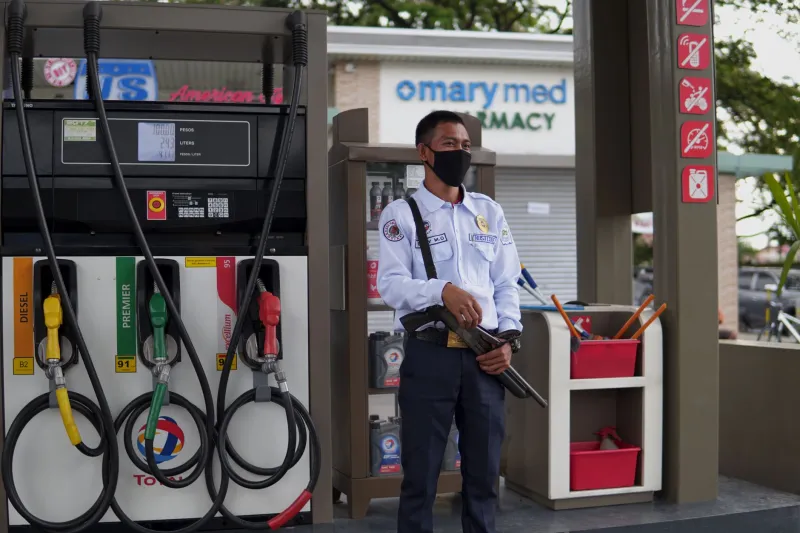
E85, which is 85 percent ethanol, is available for flex-fuel vehicles at a smaller number of stations, particularly in the Midwest where corn production makes it economically practical. Diesel gets its own separate nozzle, color-coded to prevent the kind of misfueling that can destroy an engine. Premium vs. regular is still a choice drivers make, though modern engine management systems have largely eliminated the performance difference for most vehicles — a fact that hasn't stopped the premium market from thriving on the persistent belief that more expensive fuel equals better results.
The Newest Conversation at the Pump
And then there's the conversation that's just beginning. Electric vehicle charging stations are appearing alongside traditional fuel pumps at an increasing number of locations. The question of whether to charge at home or find a public fast charger is replacing the question of which grade to select. Range anxiety is the new fear of running dry. The infrastructure is patchy, the charging speeds vary wildly, and the standards — CCS, CHAdeMO, NACS — are still being sorted out in ways that echo the early confusion of the leaded-unleaded transition.
It's a different kind of uncertainty than standing at a 1950s pump wondering what the attendant was actually putting in your tank. But it's uncertainty all the same — the particular friction that always accompanies a technology in the middle of its own transition.
The Invisible Progress
The fuel you pump today is cleaner, safer, and better understood than anything available for most of the twentieth century. The lead is gone. The standards are real. The choices are clearly labeled. You can look up exactly what octane rating your specific engine requires before you ever pull into a station.
What's been lost is mostly the texture of the experience — the attendant who made judgment calls, the cryptic grade names, the vague sense that something mysterious was happening under your hood. Fuel used to feel like a product with a personality. Now it's a utility, as standardized and invisible as tap water.
Which is, genuinely, how it should be. But it's worth remembering that it took fifty years of public health damage, two decades of regulatory pressure, and an enormous amount of industrial resistance to get here.
The pump you barely think about was a long time coming.