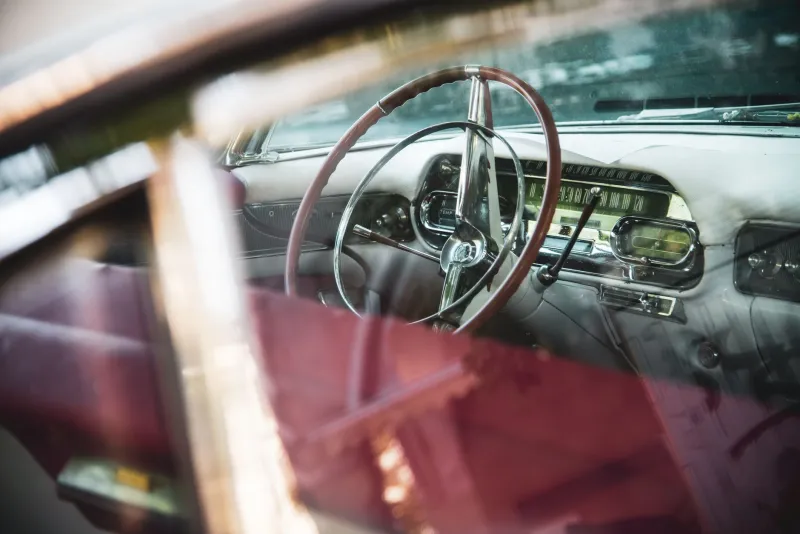
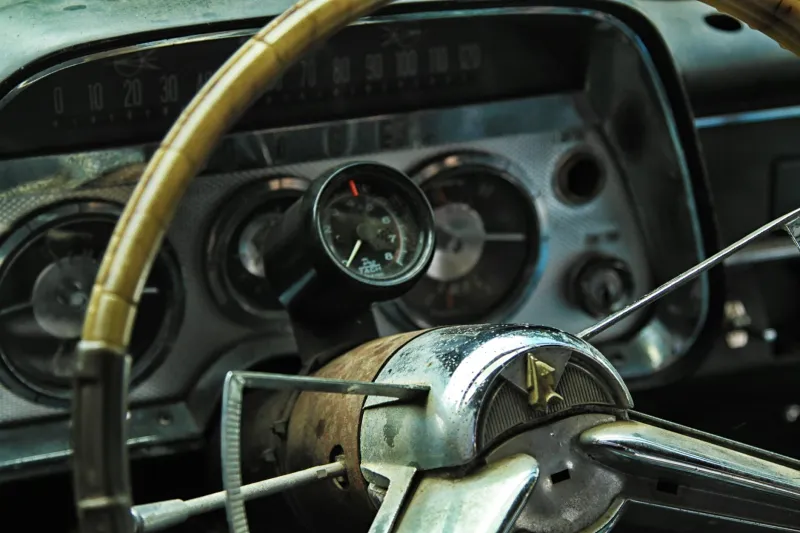
That Smell Used to Mean Something: The Rise and Fall of New Car Scent in America

You know exactly what we're talking about. You climb into a brand-new car, close the door, and something hits you immediately — warm, slightly sweet, faintly chemical, entirely specific. It doesn't smell like anything else. It smells like new. It smells like you made it.
For most of the 20th century, that scent was one of the most universally celebrated sensory experiences in American consumer culture. People referenced it in conversation. They tried to bottle it. Air freshener companies built entire product lines attempting to replicate it. The new car smell wasn't just a smell — it was a feeling. An arrival.
And now it's almost gone. Deliberately, carefully, and quietly engineered out of the vehicles we drive.
Where the Smell Actually Came From
Here's the part that nobody talked about at the dealership: new car smell was never meant to be a feature. It was a byproduct.
The distinctive scent was produced by a process called off-gassing — the release of volatile organic compounds (VOCs) from the plastics, adhesives, foam padding, vinyl upholstery, carpeting, and sealants used in a vehicle's interior. When a new car sits sealed on a transport truck or bakes in a dealership lot under the summer sun, those materials heat up and release chemical vapors into the enclosed cabin space. You open the door, and you inhale them.
The specific chemicals involved included benzene, toluene, formaldehyde, ethylbenzene, and styrene — none of which are particularly good for you, especially in concentrated doses. Studies published in the early 2000s began drawing attention to the levels of these compounds found in new vehicle interiors, particularly in hot weather conditions when off-gassing accelerates. A 2006 report from the Ecology Center found measurable levels of toxic chemicals in the interiors of dozens of popular vehicle models, including some compounds linked to cancer and reproductive harm with long-term exposure.
The smell that Americans had been climbing into and deeply inhaling for decades — sometimes deliberately, sometimes with genuine pleasure — was essentially a chemical cocktail.
The Sensory Marketing Trick No One Questioned
What makes this story so fascinating from a cultural standpoint is how completely the framing worked. Nobody sold new car smell as a health concern. It was marketed — implicitly, through every advertisement and showroom experience — as a reward. The scent signaled quality, freshness, and investment. It was aspirational.
American car culture in the postwar era was deeply sensory. The weight of a door closing. The rumble of a V8. The give of a leather seat. And yes, the smell. These were the tactile and olfactory signals that told buyers their money had been well spent. Automakers understood this instinctively, even if they never explicitly promoted the scent itself.
So for decades, nobody asked too many questions. The smell was good. The smell meant new. That was enough.
The Quiet Reformulation
By the late 1990s and into the 2000s, pressure was mounting. Environmental regulations in Europe — particularly in Germany and Scandinavia — began restricting the use of certain VOC-producing materials in consumer products, including automotive interiors. California, as it often does in American regulatory history, pushed ahead of federal standards with its own air quality guidelines.
Automakers, particularly European and Japanese manufacturers with global supply chains to manage, began reformulating their interior materials. Water-based adhesives replaced solvent-based ones. Low-emission foams and plastics became the industry standard. Leather treatments changed. Carpet backing chemistry evolved.
The result was interiors that off-gassed significantly less — which was genuinely better for human health, particularly for people who spend long hours in their vehicles. But it also meant that the iconic scent faded. The new car smell of a 2010 Toyota or a 2015 Ford is measurably milder than what you'd have encountered climbing into a 1987 Oldsmobile. And in the most recent generation of electric vehicles — with their simplified interiors and minimal use of traditional petroleum-based materials — the smell is often nearly undetectable.
The Nostalgia Industrial Complex Responds
Nature abhors a vacuum, and so does consumer culture. The decline of authentic new car smell has spawned an entire micro-industry of imitation. "New Car" air fresheners have been a staple of the automotive accessories market for decades. The scent appears in candles, sprays, and even novelty products. There are YouTube videos dedicated to ranking the best new car smell air fresheners. People have genuine opinions about which brand gets closest to the real thing.
It's a strange loop: the original scent was an accidental chemical byproduct that we romanticized into a cultural touchstone, and now that the chemicals are gone, we're buying synthetic versions of the thing we were never supposed to be enjoying in the first place.
What the Shift Actually Tells Us
The story of new car smell is, at its core, a story about how our relationship with automobiles has changed. The car used to be an emotional object — something you formed a sensory bond with from the first moment. That bond was partly irrational, partly manufactured, and occasionally toxic. But it was real.
Today's vehicles are engineered for safety, efficiency, and longevity in ways that previous generations could barely imagine. The materials are cleaner. The air inside the cabin is genuinely healthier. By any objective standard, this is progress.
But something got traded away in the process. A sensory signal that once told you something meaningful — however chemically misleading — has been quietly removed. The new car now smells like nothing in particular. Which is better for your lungs, and somehow, a little bit sadder for everything else.