License Plate Bingo and the Great Cow Count: When Road Trip Entertainment Required Nothing But Windows and Imagination
The Art of Making Something from Nothing
The minivan hadn't been invented yet. DVD players were science fiction. iPads wouldn't exist for another three decades. Yet somehow, American families regularly embarked on 12-hour drives to Yellowstone, Disney World, or Grandma's house without anyone dying of boredom. The secret wasn't advanced technology—it was the remarkable human ability to create entertainment from absolutely nothing.
 Photo: Disney World, via wallpapers.com
Road trip games in the 1970s and 80s required no equipment, no batteries, and no parental setup. They emerged organically from the fundamental challenge of keeping young minds occupied while staring out windows at America's endless highways. What started as desperate measures to prevent backseat warfare evolved into cherished family traditions that bonded generations through shared creativity and friendly competition.
The License Plate Chronicles
Every family had their own version of the license plate game, but the basic concept remained universal: spot plates from as many different states as possible before reaching your destination. This simple premise spawned countless variations, house rules, and heated debates about what constituted a "fair" sighting.
Some families kept running tallies across multiple trips, building towards the holy grail of spotting all 50 states. Others focused on finding plates in alphabetical order, turning highway travel into a geography lesson disguised as competition. The truly dedicated maintained notebooks with dates, locations, and even sketches of particularly interesting vanity plates encountered along the way.
The game taught patience, observation skills, and basic geography without anyone realizing they were learning. Kids who couldn't locate Montana on a map suddenly knew that Big Sky Country plates featured distinctive mountain silhouettes. Delaware became memorable not for its history but for the rarity of spotting its elusive blue-and-gold plates outside the Mid-Atlantic region.
Counting Everything That Moved (and Some Things That Didn't)
Cow counting elevated roadside livestock to entertainment status across rural America. The rules varied by family, but the basic premise involved tallying cattle visible from the highway, often with bonus points for horses, sheep, or the occasional llama. Cemetery sightings typically reset your count to zero, adding an element of risk that kept players scanning the horizon for both opportunities and threats.
The game worked because America's interstate system carved through genuine farming country where cattle dotted the landscape like living scoreboards. Long stretches of highway became mathematical exercises as kids calculated running totals, debated whether distant specks qualified as cows, and negotiated the eternal question of whether bulls counted double.
Beyond livestock, families counted everything imaginable: red barns, water towers, billboard advertisements for specific products, trucks with out-of-state plates, or roadkill (morbid but undeniably engaging for certain age groups). The act of counting transformed passive observation into active participation, making even the most monotonous stretches of highway feel purposeful.
The Billboard Academy
Before GPS eliminated the mystery of travel, billboards served as both navigation aids and entertainment providers. Savvy road trip veterans knew that certain signs marked important milestones: "Wall Drug - 50 Miles" meant you were making progress across South Dakota, while "South of the Border - 95 Miles" indicated serious commitment to reaching Myrtle Beach.
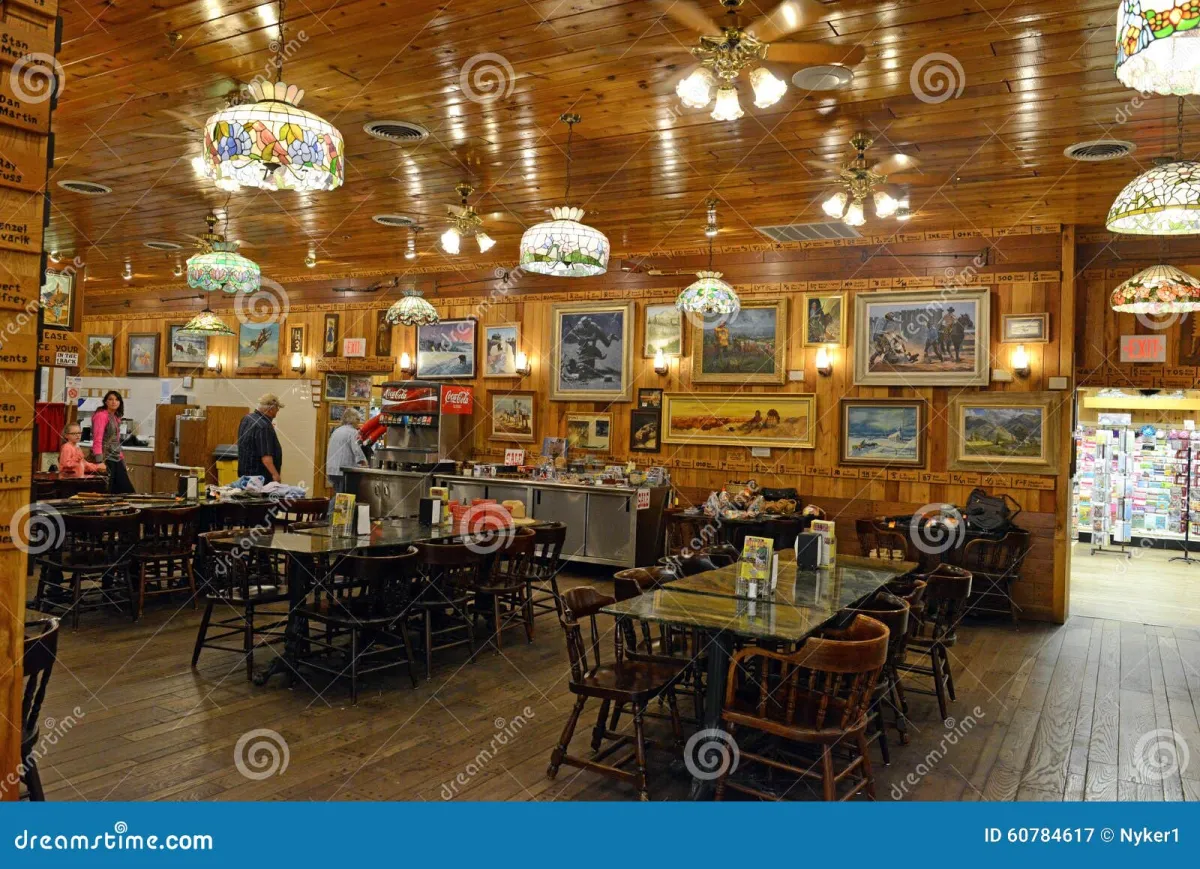 Photo: Wall Drug, via thumbs.dreamstime.com
Families developed elaborate games around billboard content. Some counted advertisements for specific products or services. Others created stories connecting random billboard messages into coherent narratives. The truly creative used roadside advertising as prompts for impromptu spelling bees, geography lessons, or debates about the relative merits of competing fast-food chains.
These highway advertisements also provided cultural education that no textbook could match. Kids learned about regional specialties, local attractions, and the peculiar American tradition of building giant roadside objects designed purely to attract tourist dollars. The billboard landscape taught lessons about commerce, creativity, and the lengths people would go to capture the attention of passing motorists.
Twenty Questions and the Oral Tradition
When the outside world failed to provide adequate entertainment, families turned inward to games that required nothing but imagination and verbal sparring. Twenty Questions became a car trip staple, with players taking turns thinking of objects while others attempted to identify them through strategic yes-or-no questioning.
The game evolved its own etiquette and house rules. Some families restricted answers to physical objects, while others allowed abstract concepts or fictional characters. Disputes over whether something was "bigger than a breadbox" led to heated negotiations about size categories and measurement standards. The most memorable rounds involved answers so clever or obscure that they became family legends, referenced years later during holiday gatherings.
Storytelling games also flourished in the pre-digital era. Families created collaborative narratives where each person added a sentence or paragraph before passing the story to the next participant. These oral traditions produced tales that ranged from silly to sophisticated, often incorporating elements from the passing landscape or recent family experiences.
The Geography of Attention
Road trip games naturally taught American geography in ways that classroom maps never could. Kids learned that Kansas really was flat, that mountains appeared gradually rather than suddenly, and that different regions had distinctive architectural styles, vegetation, and even cloud formations. The act of sustained observation created mental maps that connected abstract knowledge with lived experience.
These games also fostered what educators now call "environmental awareness"—the ability to notice, process, and remember details from your surroundings. Children who spent hours scanning highways for license plates developed enhanced pattern recognition skills. Those who counted roadside objects learned to estimate quantities and track multiple variables simultaneously.
The Social Engineering of Family Harmony
Beyond entertainment, car trip games served crucial social functions within confined family spaces. They provided structured activities that channeled competitive impulses into harmless outlets, reducing the likelihood of sibling conflicts that could derail entire vacations. The games also created shared experiences that bonded family members through common challenges and inside jokes.
Parents often served as referees, rule-makers, and tie-breakers, roles that required diplomatic skills and creative problem-solving. The most successful road trip games balanced competition with cooperation, ensuring that everyone could participate regardless of age or ability level. This democratic approach to entertainment reflected broader American values about fairness, inclusion, and the importance of keeping everyone engaged.
What We Lost When Screens Took Over
Modern families travel with entertainment systems that would have seemed magical to previous generations. Tablets provide unlimited movies, games, and educational content. Smartphones offer real-time information about destinations, weather, and traffic conditions. GPS navigation eliminates the uncertainty that once made travel feel like genuine adventure.
These technological advances solve real problems. Kids no longer whine about boredom during long drives. Parents can focus on driving rather than mediating backseat disputes. Family road trips become more peaceful, efficient, and predictable experiences.
But something intangible disappeared when we stopped looking out windows and started looking at screens. The patience required to find entertainment in passing landscapes taught lessons about creativity, observation, and making the best of limited resources. The collaborative nature of analog games fostered family bonds that individual screen time cannot replicate.
The Unintended Curriculum
Those seemingly simple road trip games provided education that extended far beyond geography or arithmetic. They taught children to find interest in ordinary things, to create structure from chaos, and to work together toward common goals. The skills developed during hours of license plate hunting—pattern recognition, sustained attention, friendly competition—translated into advantages in school, work, and life.
Perhaps most importantly, analog road trip entertainment taught an entire generation that boredom was a problem to be solved rather than a condition to be avoided. The creative solutions that emerged from highway tedium built confidence in human ingenuity and resourcefulness. Kids learned that entertainment didn't require expensive equipment or professional production—just imagination, observation, and the willingness to make something interesting from whatever materials were available.
The great cow count may seem primitive compared to modern in-car entertainment systems, but it represented something profound: the belief that the journey itself could be as engaging as the destination, if you knew how to look.