Burgundy Velour and Wood Grain Dreams: When Car Interiors Were Personal Statements, Not Corporate Compromises
The Golden Age of Automotive Self-Expression
Walk through any modern car dealership and you'll encounter a sea of black, gray, and beige interiors that look like they were designed by the same committee of accountants. But rewind to 1978, and American car shopping meant making dozens of deeply personal decisions about the space where you'd spend countless hours of your life.
Buying a car wasn't just about transportation—it was about creating a mobile extension of your personality. Dealership showrooms featured walls of fabric swatches, trim samples, and color combinations that would make today's minimalist designers weep. Buyers could choose between genuine leather, premium vinyl, velour, cloth, and even sheepskin seat covers. The decision-making process resembled interior decorating more than vehicle purchasing.
When Vinyl Wasn't a Dirty Word
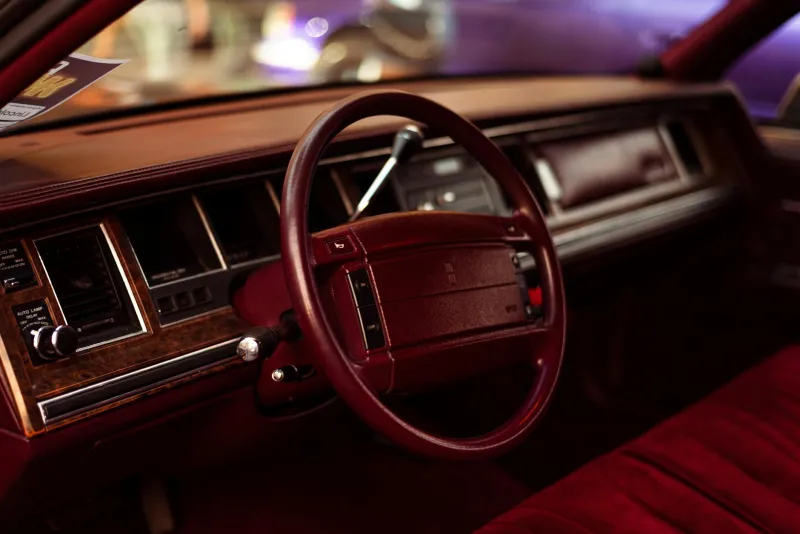
Today, vinyl car seats carry the stigma of cheapness, associated with fleet vehicles and rental cars. But in the 1970s and 80s, high-quality vinyl was a legitimate luxury choice that many buyers preferred over cloth. It was durable, easy to clean, and came in colors that would shock modern sensibilities—deep burgundy, forest green, bright blue, and even white.
The vinyl of that era wasn't the thin, plasticky material we associate with budget cars today. It was thick, supple, and often featured intricate grain patterns that mimicked exotic leathers. Some manufacturers offered vinyl with contrast stitching, perforated sections for breathability, and textures that ranged from smooth to deeply embossed.
The Wood Grain Revolution
Nothing says "1970s luxury" quite like wood grain trim, and American automakers took this aesthetic to heights that bordered on the absurd. Not content with simple dashboard accents, manufacturers wrapped entire interiors in simulated wood that covered door panels, steering wheels, gear shifters, and even seat frames.
The quality varied wildly. Premium brands offered genuine wood veneers with hand-finished details, while budget options featured printed plastic that fooled no one but somehow still felt special. Station wagons became rolling tribute acts to the American frontier, their interiors channeling log cabins and hunting lodges with an enthusiasm that modern designers would find embarrassing.
Color Combinations That Told Stories
Interior color choices in the 1970s reflected broader cultural movements and regional preferences. The Southwest inspired earth-tone packages with burnt orange, desert tan, and sage green. Urban markets gravitated toward sophisticated combinations like charcoal with red accents or navy with cream piping. Rural buyers often chose practical dark colors that wouldn't show dirt, but even "practical" meant rich browns and deep blues rather than today's corporate grays.
Some combinations became legendary among car enthusiasts. The "Cranberry and Cream" package offered by certain Cadillac models featured deep red leather with white contrast stitching and matching carpet. Chrysler's "Spinnaker White and Navy" interior made buyers feel like they were piloting a yacht rather than driving to the grocery store.
The Ritual of Choice
The process of selecting an interior was a family affair that could take weeks. Couples would visit dealerships multiple times, taking home fabric samples to see how they looked in different lighting. Children got to voice opinions about rear seat comfort and color preferences. The final decision represented a compromise between practicality, aesthetics, and budget that everyone could live with—literally.
Salespeople became interior design consultants, helping buyers navigate the bewildering array of options. They knew which fabrics wore well, which colors showed stains, and which combinations would hold their value. The relationship between buyer and seller extended beyond the transaction because both parties understood they were creating something personal and lasting.
When Cars Reflected Their Owners
These choices mattered because cars lasted longer and changed hands less frequently. Families expected to keep their vehicles for a decade or more, making interior comfort and aesthetics crucial considerations. A poor color choice meant living with regret for years, while a perfect combination brought daily satisfaction.
The interior also served as a social signal. Visitors to your driveway could instantly gauge your priorities, taste level, and attention to detail based on how you'd specified your car's cabin. Conservative buyers chose understated combinations that wouldn't date quickly, while bold personalities opted for dramatic contrasts that announced their arrival from blocks away.
The Economics of Personalization
Interior options were profitable for manufacturers but reasonably priced for consumers. Upgrading from standard cloth to premium vinyl might add $200 to the purchase price—significant money in 1975, but accessible to middle-class buyers who wanted something special. Wood grain trim packages, upgraded carpeting, and custom color combinations were positioned as affordable luxuries rather than exclusive features.
This pricing structure encouraged experimentation and self-expression. Buyers who couldn't afford a luxury brand could still create a premium-feeling interior through careful option selection. The democratization of automotive luxury meant that personal taste mattered more than budget size.
The Homogenization of America's Roads
Somewhere in the 1990s, the tide turned. Focus groups revealed that buyers preferred "timeless" colors that wouldn't look dated. Manufacturing efficiency demanded fewer options and simpler assembly processes. Global markets required interiors that appealed to diverse cultural preferences, leading to safe, neutral choices that offended no one and excited no one.
Today's car interiors are undeniably more ergonomic, better built, and longer-lasting than their colorful predecessors. But they've also become anonymous spaces that reveal nothing about their owners' personalities or preferences. The modern car cabin prioritizes function over form, efficiency over expression.
What We Lost in the Translation
The shift toward monochrome interiors reflects broader changes in American consumer culture. We've become more practical but less expressive, more efficient but less personal. The time we once spent agonizing over fabric choices now goes toward selecting smartphone cases and laptop colors—smaller decisions that carry less weight in our daily lives.
The death of automotive interior personality also eliminated a form of democratic luxury. Today's premium interiors require premium budgets, creating clear hierarchies between luxury and mainstream brands. The 1970s buyer with modest means but bold taste could create something genuinely special. Today's equivalent buyer gets black cloth seats and plastic trim, regardless of their aesthetic preferences.
Perhaps most importantly, we lost the ritual of creating something personal and lasting. Modern car buying focuses on reliability ratings, fuel economy, and resale values—important considerations, but ones that reduce vehicles to appliances rather than expressions of identity. The burgundy velour and wood grain dreams of previous generations may look dated now, but they represented something we've quietly surrendered: the belief that the spaces we inhabit should reflect who we are, not just what's practical.