When Your Car Radio Had Three Buttons and You Were Lucky to Get Two Stations
When Your Car Radio Had Three Buttons and You Were Lucky to Get Two Stations
Pull into any parking lot today and you'll see drivers sitting in their cars, scrolling through Spotify playlists or asking Siri to play their favorite podcast. It's so seamless, so instant, that we barely think about it. But rewind just a few decades, and the simple act of finding something to listen to while driving was an entirely different beast.
The Dark Ages of Dashboard Entertainment
In the 1950s, having a radio in your car wasn't a given—it was a luxury upgrade that cost extra. And if you splurged for one, you got exactly what you paid for: an AM radio with a single speaker, usually mounted in the dashboard like a porthole to the outside world.
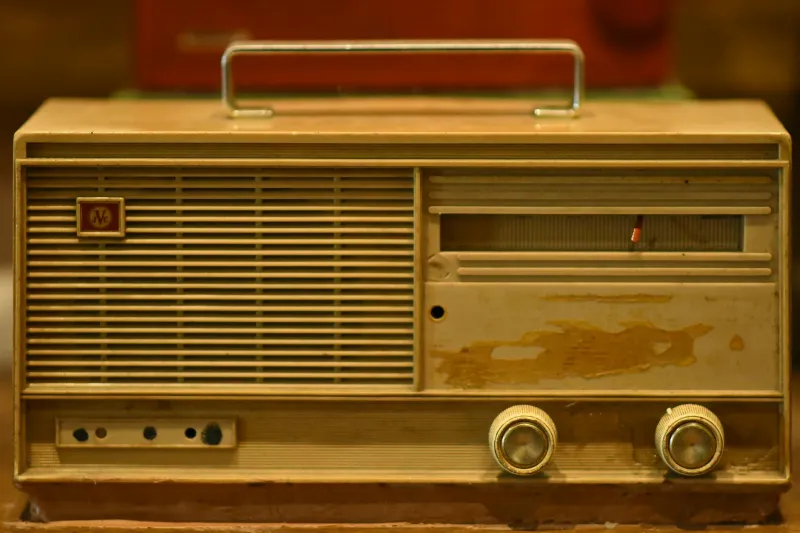
The ritual was always the same. You'd turn a chunky metal knob to power it on, then slowly rotate another dial, listening to static punctuated by fragments of music and voices. Finding a clear station required patience and luck. Drive through a tunnel or venture too far from the city, and your carefully tuned station would dissolve into white noise.
Most cars came with preset buttons—usually three or four—that you could program to your favorite stations. But "favorite" was relative when your choices were limited to whatever signals happened to reach your antenna on any given day.
The Cassette Revolution Changes Everything
The late 1960s brought the first real game-changer: the 8-track player. Suddenly, you weren't at the mercy of radio programmers or signal strength. You could bring your own music along for the ride. The catch? Each 8-track cartridge held maybe an hour of music, and they had an annoying habit of switching tracks mid-song.
Then came cassette players in the 1970s, and everything shifted. For the first time, drivers could curate their own soundtrack. The mix tape became an art form. People spent hours hunched over their stereos at home, carefully timing song transitions and leaving just enough space between tracks.
But even this freedom came with limitations. You had maybe 90 minutes of music per tape, and if you wanted to hear a specific song, you had to fast-forward or rewind, guessing where it might be located in the linear progression of the tape.
The CD Era: Digital Perfection in a Plastic Disc
The 1980s introduced the compact disc to car audio, promising perfect digital sound that wouldn't degrade over time. Early CD players were expensive and finicky—hit a pothole, and your music would skip like a broken record.
By the 1990s, the CD changer became the ultimate status symbol. These mechanical marvels, often mounted in the trunk, could hold six or twelve discs at once. You'd load them up like ammunition before a long trip, knowing you had hours of skip-free entertainment ahead.
Still, even with a 12-disc changer, you were limited to maybe 150 songs total. Choose wisely, because once you hit the road, those were your only options until you stopped to swap out discs.
Satellite Radio: The First Taste of Infinite Choice
The early 2000s brought satellite radio, and suddenly geography didn't matter. Drive from New York to Los Angeles and keep the same crystal-clear signal the entire way. Hundreds of channels meant you could find exactly what you wanted: commercial-free music, talk radio, sports, news—all available at the push of a button.
For the first time, drivers experienced what we now take for granted: choice without compromise. No more settling for whatever the local rock station was playing. No more losing your favorite talk show when you drove out of range.
The Smartphone Revolution: Everything, Everywhere, All at Once
Then smartphones changed the game entirely. Suddenly, your phone contained more music than you could listen to in a lifetime. Spotify, Apple Music, and Pandora offered millions of songs for less than the cost of a single CD.
Today's drivers don't just have access to every song ever recorded—they have it organized by mood, genre, decade, and personal preference. Voice commands mean you never have to take your hands off the wheel. "Hey Google, play that song from the coffee shop yesterday" actually works.
Your car doesn't just play music anymore; it's a portal to the entire internet. Podcasts, audiobooks, live radio from anywhere in the world, YouTube videos—all seamlessly integrated into your dashboard display.
What We Lost Along the Way
This transformation happened so gradually that we barely noticed it. But something was lost in the transition from scarcity to abundance. The shared cultural experience of everyone listening to the same radio stations disappeared. The anticipation of hearing your favorite song come on the radio—that little thrill of perfect timing—is now extinct.
Mix tapes required effort and intention. You had to really think about song order, transitions, and the overall flow. Today's auto-generated playlists are convenient, but they lack the personal touch of someone carefully crafting a musical journey.
The Numbers Don't Lie
Consider this: a typical 1960s car radio could access maybe a dozen stations on a good day. Today's connected car can access over 100 million songs, thousands of podcasts, and radio stations from every corner of the globe. We went from having a handful of choices to having literally infinite options.
The technology that seemed so futuristic in Knight Rider—a car that could talk to you and respond to voice commands—is now standard in most new vehicles. We're living in the future that 1980s TV promised us, and it happened so smoothly we barely noticed the transition.
Next time you tell your car to "play some jazz," remember that just a generation ago, jazz meant hoping the local station happened to have a jazz hour, and hoping you'd be in range to receive it clearly. We've come a long way from spinning that dial and hoping for the best.