When Anyone Could Pop the Hood and Actually Fix Something — Before Cars Became Computers on Wheels
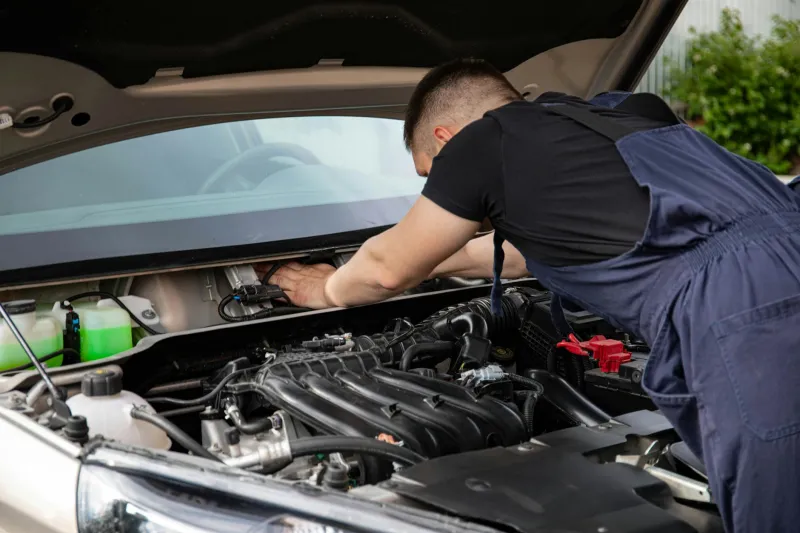
The Saturday Afternoon Mechanic
Picture this: It's 1985, your Chevy Malibu starts making a weird noise, and your first instinct isn't to Google the nearest service center. Instead, you grab a beer, pop the hood, and spend the afternoon tinkering until you figure it out. Maybe you call your buddy Dave who knows engines, or you flip through a Chilton's manual. By Sunday evening, you're back on the road, $30 poorer but infinitely more satisfied.
That world feels like ancient history now, but it wasn't really that long ago. For decades, cars were mechanical puzzles that regular people could solve. Sure, you might not tackle a transmission rebuild in your garage, but changing oil, swapping spark plugs, or replacing a starter? That was just part of owning a car.
When Cars Had Personalities, Not Passwords
The difference between then and now isn't just about complexity — it's about access. A 1980s sedan had maybe a dozen computer chips. Today's average car runs on over 100 million lines of code, more than a Boeing 787. But here's the kicker: it's not just that cars got more complicated. They got deliberately locked down.
Modern vehicles don't just resist amateur repair — they actively prevent it. Try to replace the battery in many new cars, and the vehicle might refuse to start until a dealer "teaches" it to recognize the new part. Swap out a headlight bulb, and you could trigger a cascade of error messages that only proprietary diagnostic equipment can clear.
This isn't an accident. Automakers have systematically designed repairability out of their vehicles, replacing mechanical connections with digital handshakes that require their blessing to complete.
The Rise of the Diagnostic Hostage
Remember when your car's check engine light meant something you could actually check? Those days are over. Today's vehicles speak in error codes that require thousand-dollar scan tools to decode. Even if you crack the code, good luck finding the part or the software permission to install it.
Take Tesla, the poster child for this new reality. When a Model S needs a door handle replacement — a repair that should take twenty minutes — the car often needs to be towed to a service center because the handle won't function without Tesla's software authorization. It's like needing Microsoft's permission every time you want to replace your keyboard.
This shift represents more than inconvenience. It's a fundamental change in what ownership means. Your grandfather owned his 1967 Ford pickup in every sense — he could fix it, modify it, or strip it for parts. You own your 2024 Ford F-150 more like you own a smartphone: you possess it, but the manufacturer controls how it works.
The Death of Shade Tree Mechanics
America used to be full of people who learned cars by getting their hands dirty. Every neighborhood had that guy who could diagnose engine trouble by sound and fix it with basic tools. Auto shop classes in high schools taught kids practical skills that lasted a lifetime.
That culture is vanishing. Why learn to work on cars when you legally can't? Modern vehicles have created a generation that sees the hood as decoration rather than an invitation to explore.
The numbers tell the story. In 1990, about 40% of Americans performed their own basic car maintenance. Today, it's closer to 15%, and that's mostly limited to checking tire pressure and adding windshield washer fluid.
The Right to Repair Revolution
This lockdown hasn't gone unnoticed. The "right to repair" movement has gained serious momentum, with states like Massachusetts passing laws requiring automakers to provide independent shops and consumers access to diagnostic information.
But automakers aren't giving up easily. They argue that opening their systems creates security risks — and they're not entirely wrong. Modern cars are rolling computers connected to the internet, and a badly executed repair could theoretically be exploited by hackers.
Still, this security argument rings hollow when you consider that John Deere uses identical reasoning to prevent farmers from fixing their own tractors, or Apple claims similar concerns about iPhone repairs.
What We've Lost Along the Way
The shift from mechanical to digital has brought real benefits. Modern cars are safer, more efficient, and more reliable than anything from the wrench-and-YouTube era. But we've traded something valuable in the process.
There was satisfaction in understanding how your car worked, in being able to nurse it through problems, in the relationship between human and machine. Today's cars are undeniably better appliances, but they're also more anonymous, more disposable, and more dependent on corporate permission to function.
The Road Ahead
The battle over car repair represents a larger question about technology and ownership in the 21st century. As everything becomes "smart," will we retain any meaningful control over the devices we depend on?
Some manufacturers are starting to recognize that completely locking out consumers creates backlash. Ford recently announced plans to make diagnostic information more accessible, and several startups are developing aftermarket solutions for software-locked repairs.
But make no mistake — the days when any determined amateur could keep an old car running with creativity and basic tools aren't coming back. The question now is whether we'll accept a future where ownership means paying monthly fees for the privilege of using things we supposedly bought, or whether we'll demand the right to fix what we own.
Your grandfather's Buick may have left oil spots on the driveway, but at least when it broke down, he could actually do something about it. Today's cars rarely break down — but when they do, you're at the mercy of whoever holds the digital keys.