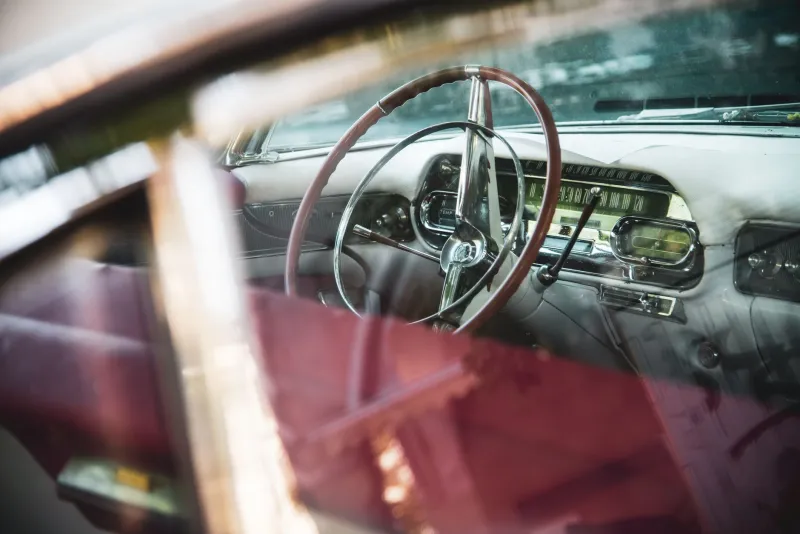
Running on Instinct: When American Drivers Knew Their Cars by Feel, Not by Flashing Lights
The Zen of the Fuel Gauge
There was a time when running low on gas didn't trigger a symphony of beeps, chimes, and flashing dashboard warnings. American drivers in the 1970s and 80s operated on pure intuition, reading their cars like old friends who telegraphed their needs through subtle signals only a practiced eye could interpret.
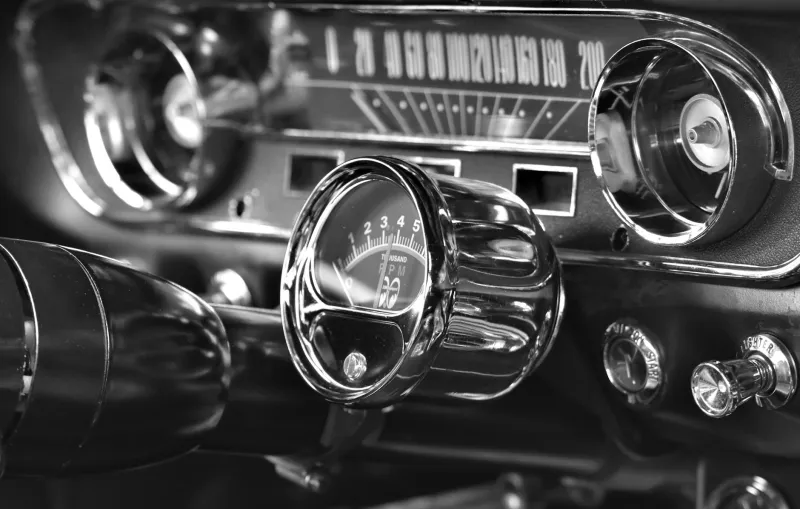
The fuel gauge wasn't a precise instrument—it was more like a mood ring for your gas tank. That needle would hover somewhere between a quarter tank and empty for what felt like geological ages, then suddenly plummet to "E" faster than a politician's approval rating. But seasoned drivers didn't panic. They'd developed an internal calculus that factored in the car's personality, recent driving conditions, and a kind of automotive sixth sense.
When Cars Had Personalities, Not Computers
Every car had its quirks. Your dad's 1976 Buick might show empty but still have three gallons left—enough for another 60 miles if you knew how to nurse it. Meanwhile, your neighbor's Ford pickup would sputter and die the moment that needle kissed the "E," no mercy, no grace period. Learning these individual characteristics wasn't just helpful; it was essential survival knowledge.
 Photo: Ford pickup, via otocarnews.com
Drivers kept mental spreadsheets of their vehicle's behavior. They knew that their car got better mileage on highway trips versus city driving, that cold weather meant burning more fuel, and that a heavy load would drink gas faster. This wasn't obsessive—it was practical wisdom earned through experience and the occasional long walk to the nearest gas station.
The Art of Fuel Stretching
Running low on gas became a delicate dance between confidence and conservation. Experienced drivers knew exactly how to squeeze every last mile from a nearly empty tank. They'd ease off the accelerator, avoid unnecessary stops, and plan their route to minimize hills and traffic lights. Some swore by the technique of gently rocking the car at red lights to slosh fuel toward the pickup tube.
There was genuine pride in this skill. Being able to accurately predict your fuel range wasn't just convenient—it was a mark of automotive competence. The driver who could consistently run their tank down to fumes and still make it to the gas station earned respect. It demonstrated mastery over machine, a harmonious relationship between human and automobile.
When Warning Lights Actually Meant Something
If a warning light came on in an older car, it meant business. The oil pressure light wasn't there to gently remind you about maintenance—it was an emergency klaxon signaling imminent engine death. The temperature gauge climbing into the red zone meant you had minutes, not miles, before serious damage occurred.
This created a different relationship with automotive alerts. When warning systems were rare and serious, drivers paid attention. Today's cars bombard us with notifications about everything from low tire pressure to upcoming oil changes, creating a kind of alert fatigue that would have been unthinkable to earlier generations.
The Psychology of Automotive Trust
Modern fuel systems remove all uncertainty. Digital readouts tell us exactly how many miles we can drive before running dry, updated in real-time with mathematical precision. Low fuel warnings start chiming when we still have 50+ miles of range remaining. We've gained convenience but lost something harder to quantify—the intimate knowledge that came from truly understanding our vehicles.
This shift reflects a broader change in how Americans relate to their possessions. We've moved from a culture of repair and understanding to one of replacement and warning systems. Our grandparents could diagnose car problems by sound, smell, and feel. Today, we rely on diagnostic computers to tell us what's wrong, often in cryptic codes that require professional interpretation.
What We Lost in Translation
The transition to digital dashboards and comprehensive warning systems solved real problems. Fewer people run out of gas on highways. Fewer engines seize from oil starvation. Fewer radiators boil over from overheating. These are genuine improvements that have saved countless drivers from inconvenience and expensive repairs.
But something intangible disappeared in the process. The quiet confidence that came from knowing your car intimately—understanding its moods, anticipating its needs, and successfully managing its limitations—has been replaced by passive dependence on electronic systems. We've become passengers in our own vehicles, guided by algorithms rather than instinct.
The Broader Implications
This automotive evolution mirrors changes throughout American life. We've systematically replaced human judgment with automated systems, often with good reason. But each replacement chips away at our confidence in our own abilities to read, interpret, and respond to the world around us.
The driver who could coax 400 miles from a tank that "should" only go 350 possessed a form of practical intelligence that's increasingly rare. They understood their tools deeply enough to push boundaries safely, to extract maximum performance through knowledge rather than technology.
Today's cars are undeniably better—safer, more efficient, more reliable. But they've also made us strangers to the machines we depend on daily, passengers in our own automotive experience. The fuel gauge may be more accurate now, but it's no longer a conversation between driver and machine—it's just another screen telling us what to think.