The Handwritten Receipt and the Long Wait: What It Used to Mean to Order a Car From the Factory

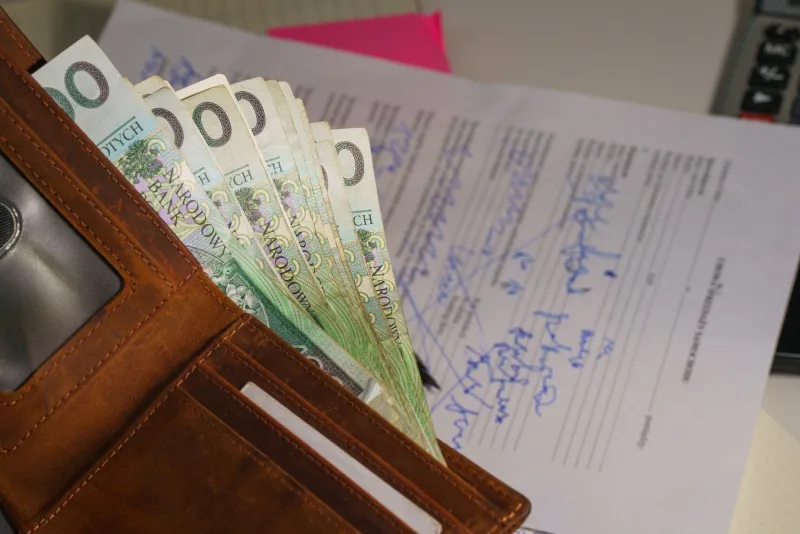
You'd decided on the color. You'd gone back and forth on the options — did you need the power windows, or was that extravagant? You'd sat across from a salesman at a wide desk covered in brochures, and together you'd worked through a configuration sheet that looked more like a tax form than a shopping experience. And then, after all of that, you signed something, handed over a deposit check, and left the dealership with a carbon-copy receipt and absolutely nothing else.
No confirmation email. No order number to track online. No automated updates. Just a piece of paper and the word of a man you'd probably never met before that day.
Your car would arrive in six to eight weeks. Maybe ten. Maybe twelve.
Good luck.
How Factory Orders Actually Worked
For much of the twentieth century, the factory order was a genuine and widely used part of the American car-buying process — though not always by choice. Dealer lots, especially in smaller markets, couldn't stock every possible combination of trim level, engine, color, and option package. If you wanted a specific configuration that wasn't sitting on the lot, ordering from the factory was your only real option.
The process began at the dealer's desk, where a salesman would work through the order form with you — a document that was part catalog, part contract, and entirely opaque to the average buyer. Options were coded. Prices were sometimes bundled in ways that made it hard to know exactly what you were paying for. The salesman was the interpreter, and he had every incentive to add things to the order that boosted the final price.
Once the order was submitted to the manufacturer, it entered a production queue. Ford, GM, and Chrysler each ran their own scheduling systems, and a dealer's allocation — meaning how many factory-order slots they had access to — depended on their sales volume and their relationship with the regional manufacturer representative. A high-volume dealer in a major city might get your car built and shipped in six weeks. A smaller rural dealer might be looking at three or four months.
And through all of it, you knew essentially nothing.
The Information Vacuum
This is the part that feels almost unimaginable from a modern perspective: there was no way to check.
You couldn't log into a portal. Nobody sent you a production update. The dealer might call if there was a significant delay — or might not. Some buyers would check in periodically, calling the dealership to ask if there was any news. The salesman would disappear to make a phone call, come back, and say something like, "Still on schedule, should be here in a few weeks." Whether that was accurate or optimistic or entirely fabricated was impossible to know.
The trust involved was considerable. You'd paid a deposit — often a few hundred dollars, sometimes more — on a car you couldn't see, being built at a plant you'd never visit, on a timeline that existed only as a verbal estimate. The receipt in your glove compartment was your only documentation that the transaction had occurred at all.
And the dealer knew this. The power imbalance was significant and structural. You needed them to advocate for your order within the manufacturer's system. You needed them to call you when the car arrived rather than quietly selling it to someone else at a higher price — which did happen, especially during periods of high demand or when a particular model was hot.
When the Car Finally Arrived
When the call eventually came — "Your car is here" — the experience of going to pick it up carried a weight that modern car buying simply doesn't replicate.
You'd spent weeks, sometimes months, thinking about this car. You'd described it to your friends. You'd told your spouse what color you'd chosen. You'd imagined it in the driveway. And then you walked into the dealership and saw it for the first time, usually sitting in the service bay or pulled up to the front entrance, and the reality of it either matched what you'd been imagining or it didn't.
Sometimes it didn't. Options you'd thought you ordered weren't there. Colors looked different in person than they had in the brochure. Occasionally — and this is documented in enough consumer complaints from the era to be considered a real pattern — the car that arrived wasn't quite the car that had been ordered, and the dealer would explain, with practiced patience, why the substitution had been made and why, actually, this was better.
Your recourse was limited. You could refuse the car and lose your deposit. You could accept it and be unhappy. Or you could negotiate, which put you back at the dealer's desk in exactly the position they preferred.
How Everything Changed
The first major shift came from the dealers themselves, though not out of generosity. Through the 1980s and 90s, manufacturers pushed dealers toward larger lot inventories, arguing that customers who could drive away the same day were more likely to buy than customers asked to wait. Dealers responded by stocking more vehicles, which gradually reduced the need for factory orders in many markets.
The internet did the rest. By the early 2000s, buyers could search real inventory across multiple dealerships, compare configurations, and show up at the lot already knowing exactly what was available and for how much. The information asymmetry that had defined car buying for decades began to collapse.
Online configuration tools let buyers spec out exactly what they wanted before ever entering a showroom. Third-party sites published invoice prices, making the dealer's cost visible for the first time. Factory ordering didn't disappear, but the buyer's experience of it transformed — you could now track your order online, receive production milestones by email, and watch your vehicle move from build queue to shipping to arrival with the same casual attention you'd give an Amazon package.
And then came the direct-to-consumer brands. Tesla, Rivian, and others eliminated the dealer entirely, turning the factory order into the only order — and making the wait feel less like helpless uncertainty and more like anticipation.
What That Receipt Represented
Look back at that carbon-copy receipt and what it really was: proof that you'd entered into a transaction with someone who held almost all the power, on terms you couldn't fully verify, for a product you couldn't see, on a timeline that was essentially a guess.
And millions of Americans did it, year after year, because it was the only way to get the car they actually wanted.
The fact that we've moved from that world to one where you can configure a vehicle on your phone, watch it get built, and have it delivered to your door is a genuinely dramatic shift — not just in technology, but in the fundamental balance of power between buyer and seller.
That handwritten receipt wasn't just a purchase confirmation. It was a leap of faith.
And somehow, most of the time, the car actually showed up.