When Your Car Dashboard Was Just Needles and Knobs — Before It Became a Computer Screen
When Your Car Dashboard Was Just Needles and Knobs — Before It Became a Computer Screen
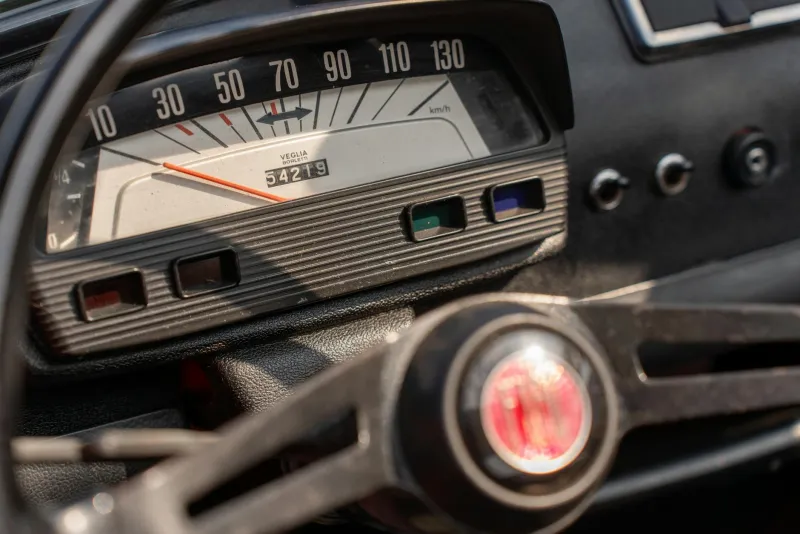
Slide into a 1970 Chevelle and you'll find yourself staring at a dashboard that looks almost primitive by today's standards. A speedometer. A fuel gauge. Maybe an AM/FM radio if you were lucky. The fanciest cars might have thrown in a clock and a temperature gauge. That was it.
Fast-forward to today, and the average Honda Accord dashboard contains more technology than the entire Apollo 11 spacecraft. Where those simple analog needles once lived, you'll now find a high-definition touchscreen displaying everything from Netflix to real-time traffic patterns. It's a transformation so complete that most drivers under 30 have never experienced the focused simplicity of driving with just the basics.
The Age of Manual Vigilance
Back then, being a good driver meant being constantly aware of your car's vital signs. You learned to listen for engine knock, feel for transmission slips, and keep one eye on that temperature needle. Running out of gas wasn't just inconvenient — it was embarrassing proof that you hadn't been paying attention.
Drivers developed an almost intimate relationship with their vehicles out of necessity. You knew exactly how your engine sounded when it was happy, and you could tell something was wrong long before any warning light appeared. Because there weren't many warning lights to begin with.
The oil pressure gauge wasn't just decoration — it was your early warning system. Same with the voltmeter and the temperature gauge. These weren't luxury features; they were essential tools that kept you from being stranded on the roadside with a blown engine.
When Entertainment Meant One Knob
The radio was the dashboard's only concession to entertainment, and even that was basic. AM was standard, FM was an upgrade, and if you wanted to change stations, you physically turned a dial and hoped to catch a clear signal. No satellite radio beaming down 200+ channels. No Bluetooth streaming your Spotify playlist. No voice commands to skip songs you didn't like.
Most cars didn't even have air conditioning controls on the dashboard — because most cars didn't have air conditioning. Climate control meant rolling down the window or turning on the heater, which was usually controlled by a simple lever that directed engine heat into the cabin.
The Digital Revolution Creeps In
The first major shift came in the 1980s when digital displays started appearing. Suddenly, instead of a needle pointing to "E" or "F," you might see "FUEL LOW" spelled out in green LED letters. It felt like science fiction.
By the 1990s, cars were gaining features that seemed impossibly advanced: trip computers that calculated your average fuel economy, digital clocks that didn't need winding, and CD players that could skip tracks without physical buttons.
But even these early digital features were additions to the basic analog setup, not replacements. You still had your traditional gauges, still needed to actively monitor your car's health, still had to think about basic maintenance intervals.
Today's Command Center
Modern dashboards have flipped this relationship completely. Your car now monitors itself and tells you what it needs. Oil life remaining? The computer calculates it based on driving conditions. Tire pressure? Sensors report any problems instantly. Navigation? Your dashboard knows exactly where you are and can guide you anywhere on earth.
Today's typical dashboard touchscreen handles dozens of functions that didn't exist in older cars: backup cameras, lane departure warnings, collision alerts, smartphone integration, voice recognition, real-time weather updates, and streaming entertainment from services that didn't exist when those analog gauges were cutting-edge technology.
Some luxury cars have eliminated physical gauges entirely, replacing them with customizable digital displays that can show traditional needle-style gauges or completely reimagined interfaces. You can literally choose whether your speedometer looks like a 1960s Mustang or something from Star Trek.
The Lost Art of Mechanical Awareness
This technological leap has created an interesting trade-off. Modern drivers enjoy unprecedented convenience and safety, but they've lost the mechanical intuition that previous generations developed by necessity. When your car's computer handles everything from oil change reminders to tire pressure monitoring, you don't develop the same intimate knowledge of how your vehicle actually works.
Your grandfather could probably diagnose engine problems by sound alone and knew exactly how his car behaved in different conditions. Today's drivers might not even know what oil their car uses — the computer just tells them when to schedule service.
The Screen Takes Over Everything
Perhaps most dramatically, the dashboard has evolved from a collection of specific-purpose instruments into a general-purpose computer interface. That touchscreen doesn't just replace the radio — it's also your phone, your GPS, your climate control, your vehicle settings menu, and increasingly, your entertainment system.
Some new cars can run apps, browse the internet, and even play video games while parked. The dashboard has transformed from a simple instrument panel into something closer to a living room entertainment center that happens to be attached to a car.
The change represents more than just technological progress — it's a fundamental shift in how we relate to our vehicles. Cars have evolved from mechanical tools that required active management into sophisticated computers that manage themselves, leaving us free to focus on the road ahead. Or, increasingly, on the screen in front of us.