The Art of Talking Your Way Out of Trouble: When Traffic Stops Were Human Conversations
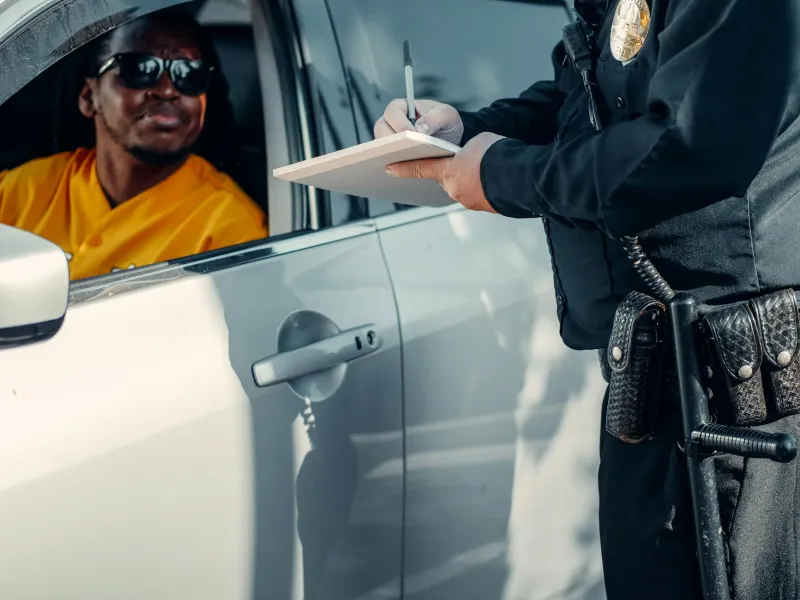
Picture this: You're cruising down a country highway in 1975, windows down, radio playing, when you see those flashing lights in your rearview mirror. Your heart sinks, but there's still hope. Maybe the officer's having a good day. Maybe your excuse about rushing to the hospital will work. Maybe that "Sorry, Officer" will earn you just a warning.
Fast-forward to today, and that same scenario plays out very differently. The officer already knows exactly how fast you were going thanks to calibrated radar. Your speed, location, and violation are instantly logged into a digital system. There's no negotiation, no discretion, and increasingly, no human officer at all—just a camera that mailed you a ticket before you even made it home.
When Your Story Actually Mattered
Back in the day, traffic enforcement was fundamentally human. Officers relied on their eyes to judge speed, their gut to assess situations, and their discretion to decide outcomes. Getting pulled over meant engaging in an actual conversation where the stakes could shift based on how you presented yourself.
"I was keeping up with traffic, Officer" wasn't just an excuse—it was often a legitimate defense. Without precise speed measurement tools, an officer's assessment of your driving relative to other cars carried real weight. The difference between a ticket and a warning often came down to your demeanor, your explanation, and whether the officer believed your story.
This created a uniquely American roadside culture. Drivers developed strategies: keep your hands visible, turn off the engine, have your documents ready, and always lead with respect. The interaction was a social dance where both parties understood their roles, and the outcome wasn't predetermined.
The Technology That Changed Everything
The transformation began in the 1950s with the first radar guns, but it took decades for the technology to become standard equipment. Early radar devices were bulky, expensive, and required training to operate effectively. Many smaller police departments couldn't afford them, leaving plenty of room for the old-fashioned human judgment call.
By the 1980s, radar had become sophisticated and portable. Suddenly, officers had precise, court-admissible evidence of your exact speed. The conversation shifted from "How fast do you think you were going?" to "Do you know why I clocked you at 47 in a 35?"
The real game-changer came with automated enforcement. Red-light cameras appeared in the 1990s, followed by speed cameras that could catch violations without any human presence. These systems removed the human element entirely—no conversation, no discretion, just automated justice delivered by mail.
The Death of Roadside Diplomacy
Modern traffic enforcement has become remarkably efficient and remarkably cold. Digital systems now track everything: your driving record pops up instantly on the officer's computer, previous violations are immediately visible, and many departments use body cameras that record every interaction.
This technological precision eliminated what police officers used to call "roadside justice"—the ability to factor in circumstances, intent, and human judgment. An officer might have let you off with a warning for speeding to the hospital in 1970, but today's automated systems don't distinguish between emergencies and joy rides.
The numbers tell the story: traffic citation revenue has exploded as enforcement became more systematic. Cities that installed automated cameras saw ticket revenues increase by hundreds of percentage points, not because people suddenly started driving worse, but because every violation now gets caught and processed.
What We Gained and Lost
This transformation brought undeniable benefits. Traffic enforcement became more consistent and less prone to bias. The officer's bad day no longer determined your fate, and automated systems don't discriminate based on appearance or accent. Safety improved as predictable consequences made speeding less appealing.
But something intangible disappeared in the process. The human connection between law enforcement and citizens—even in the context of a traffic stop—created opportunities for understanding, education, and mercy. Officers could explain why certain intersections were dangerous or why speed limits existed, turning violations into teaching moments.
The old system also allowed for common sense exceptions. A parent rushing a sick child to the doctor, someone genuinely lost and confused, or a driver dealing with a car emergency could explain their situation and potentially avoid punishment. Today's automated systems can't hear explanations or consider circumstances.
The New Reality of Traffic Justice
Today's traffic enforcement operates more like a vending machine than a human interaction. Speed cameras capture your license plate, computers match it to your address, and tickets arrive by mail with mathematical precision. There's no conversation, no explanation, and often no way to contest the violation without going to court.
Even traditional traffic stops have become more scripted. Officers follow standardized procedures, body cameras record everything, and digital systems guide decision-making. The outcome is often determined before the conversation even begins.
Looking Back at Roadside America
The shift from human discretion to technological precision reflects broader changes in American society. We've gained consistency, efficiency, and fairness in many ways, but we've lost something harder to quantify—the human element that once made even negative interactions opportunities for connection and understanding.
Those roadside conversations of decades past weren't always fair, and they certainly weren't always just. But they were human, messy, and real in ways that today's automated enforcement can never be. In our rush to create perfect justice, we may have lost the very thing that made justice meaningful: the recognition that behind every violation is a person with a story worth hearing.