When Thumbs Up Meant Safe Passage: How America's Roadside Trust Vanished Overnight
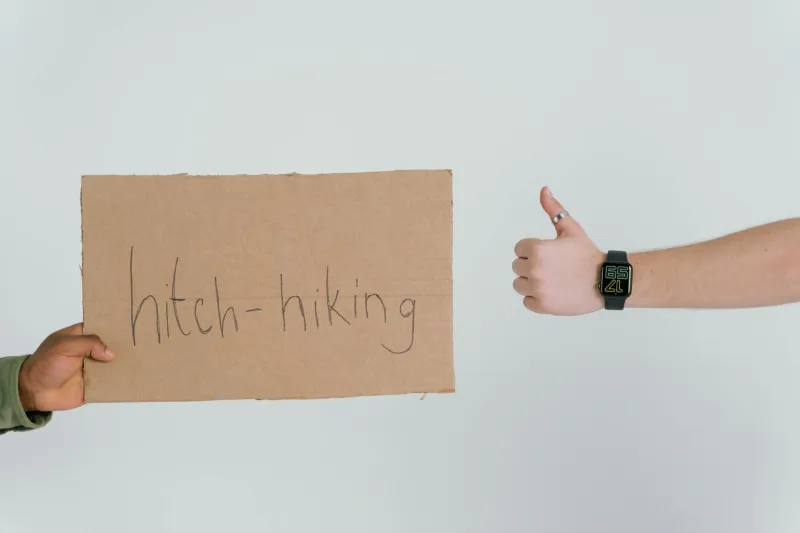
The Golden Age of Roadside Faith
Picture this: It's 1968, and a college student in Ohio sticks out their thumb on Route 66. Within minutes, a businessman in a Buick pulls over, rolls down his window, and asks "Where you headed?" No questions about criminal background checks, no worries about serial killers, no thought that this interaction might end badly. This was just Tuesday in America.
For nearly four decades, hitchhiking represented something beautiful about American culture: the belief that strangers were fundamentally decent people who might help you get where you needed to go. It wasn't just hippies and drifters — it was soldiers coming home from war, workers heading to job sites, families whose car had broken down, and anyone else who needed to cover ground without spending money they didn't have.
The practice was so normalized that many states actually had designated hitchhiking areas. Highway patrol officers would sometimes give rides themselves. Parents taught their kids the unspoken rules: ride in groups when possible, trust your instincts, and always offer to chip in for gas. It was a transportation network built entirely on mutual respect and shared humanity.
More Than Just Free Rides
What made hitchhiking work wasn't desperation — it was community. Drivers picked up hitchhikers for conversation on long, boring stretches of highway. Many formed genuine friendships that lasted years. Some drivers were former hitchhikers themselves, paying it forward. Others just believed in helping people out.
The economics made sense too. Gas was cheap, but not everyone could afford a car. Hitchhiking allowed people to travel for work, visit family, or explore the country without the massive expense of vehicle ownership. It was essentially a crowd-sourced transportation system that required no technology, no corporate oversight, and no profit motive.
College students hitchhiked home for holidays. Military personnel caught rides between bases. Workers without cars got to job sites. It was practical, efficient, and surprisingly safe. FBI statistics from the 1960s show that violent crimes involving hitchhikers were statistically insignificant compared to other forms of assault.
When Everything Changed
The decline wasn't gradual — it was a cliff. By the early 1980s, something that had been completely normal for generations became unthinkable almost overnight. What happened?
First came the horror stories. A few highly publicized cases of violence involving hitchhikers dominated news cycles. Ted Bundy's crimes, in particular, created a lasting association between hitchhiking and danger, even though Bundy was far more likely to approach women in parking lots than pick up hitchhikers on highways.
Television amplified these fears. Shows and movies began portraying hitchhikers as either dangerous criminals or naive victims. The nuanced reality — millions of safe, uneventful rides — couldn't compete with dramatic stories of the rare disasters.
Meanwhile, car ownership became more accessible. Credit expanded, used car lots multiplied, and having your own vehicle shifted from luxury to necessity. The practical need for hitchhiking diminished just as the perceived danger increased.
The Rise of Stranger Danger
The 1980s brought a fundamental shift in how Americans viewed strangers. The same decade that ended hitchhiking also gave us "stranger danger" campaigns, helicopter parenting, and the belief that unknown people posed inherent threats. This wasn't entirely wrong — crime rates were rising in many areas — but it created a culture where helping strangers became suspicious rather than virtuous.
Insurance companies and lawyers didn't help. Giving rides to strangers suddenly carried liability risks that previous generations never considered. What if the hitchhiker got injured? What if they sued? The legal system had created enough uncertainty to make generosity feel dangerous.
States began passing laws restricting or banning hitchhiking entirely. What had once been actively encouraged became illegal in many places. The infrastructure of trust that had supported the practice for decades was systematically dismantled.
The Digital Resurrection
Here's the fascinating part: We didn't actually stop hitchhiking. We just made it digital.
Uber and Lyft are essentially hitchhiking with smartphones. You're still getting into a stranger's car, trusting them to take you where you want to go. The difference is background checks, GPS tracking, rating systems, and corporate liability. We've recreated the same basic transaction — ride with stranger, pay small amount — but wrapped it in enough technology to make it feel safe again.
The irony is striking. Today's rideshare drivers undergo more screening than 1960s hitchhiking required, but they're also complete strangers motivated primarily by money rather than community spirit. We've gained security and lost something harder to quantify: the simple faith that people are generally good.
What We Lost Along the Highway
The death of hitchhiking represents more than just a change in transportation habits. It marked the end of a particular kind of American optimism — the belief that strangers might help you just because you needed help.
This shift didn't happen in isolation. It coincided with the decline of community institutions, the rise of suburban isolation, and the gradual erosion of social trust that has defined the past forty years. When Americans stopped picking up hitchhikers, we also stopped believing that unknown people were probably decent.
Today's young adults live in a world where getting a ride from a stranger requires an app, a credit card, and a complex technological infrastructure. The idea of just sticking out your thumb and trusting in human kindness seems not just risky, but almost incomprehensible.
Yet something essential was lost in that transition. The hitchhiking era represented a time when Americans believed in each other enough to take small risks for mutual benefit. That faith built communities, connected people across class lines, and created millions of small moments of human connection.
We're safer now, statistically speaking. But we're also more alone, more suspicious, and more dependent on corporate systems to facilitate the basic human interactions that once happened naturally on the side of the road. Progress, perhaps — but the kind that makes you wonder what else we've given up along the way.