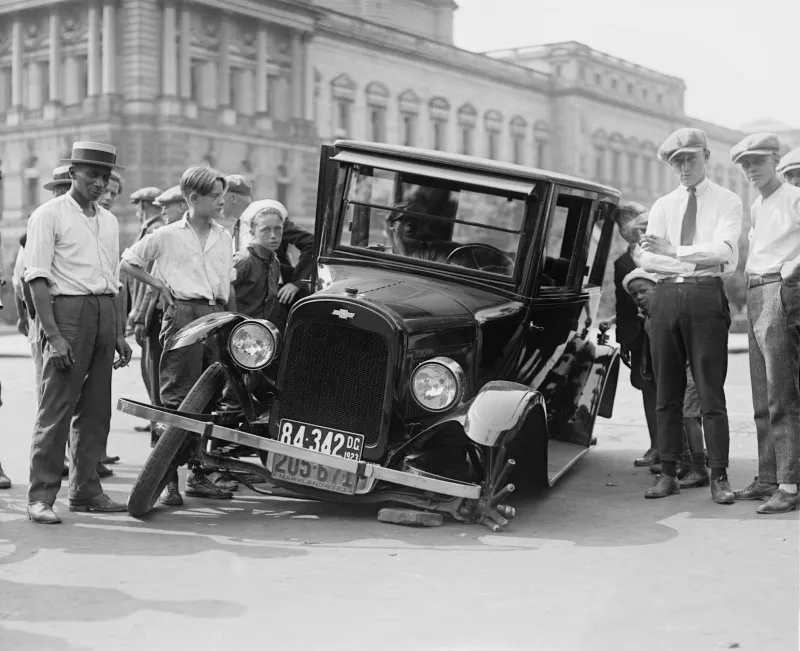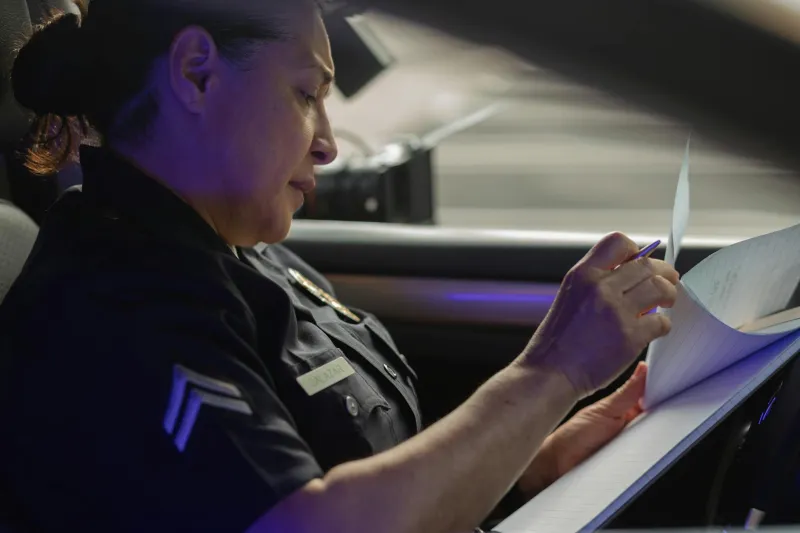
Picture this: You're cruising down Main Street in 1965, doing maybe 35 in a 25 zone, when you see the red lights in your rearview mirror. You pull over, roll down your window, and Officer Johnson walks up—the same guy who coached your kid's Little League team. After a brief chat about your family and a gentle reminder to slow down, you're back on the road with nothing more than a verbal warning and a friendly wave.
Fast-forward to today, and that same scenario plays out very differently. A camera catches your license plate, a computer calculates your fine based on complex algorithms, and three weeks later, you're staring at a $247 ticket in your mailbox—no conversation, no context, no consideration of circumstances.
The Human Touch of Mid-Century Traffic Stops
In the 1950s and 1960s, getting pulled over was genuinely a human interaction. Police officers had broad discretion, and they used it. A typical speeding ticket might run you $5 to $15—equivalent to about $50 to $150 today when adjusted for inflation. But here's the kicker: officers regularly let people off with warnings, especially for minor infractions.
The system operated on local knowledge and personal judgment. Officers knew their beats, recognized repeat offenders, and could distinguish between the teenager joyriding and the businessman running late for an important meeting. They considered factors that no algorithm can process: Was it an emergency? Did the driver seem genuinely remorseful? Was this their first offense in years?
Ticket books were simpler affairs too. Officers wrote citations by hand, often taking time to explain the violation and offering advice on local traffic patterns. The whole interaction, even when it resulted in a ticket, felt more like a community correction than a financial penalty.
When Fines Were Fines, Not Revenue Streams
The financial impact of traffic enforcement has exploded beyond recognition. In 1970, the average speeding ticket cost about $10—roughly $75 in today's money. Compare that to modern reality: speeding tickets now average $150 to $300 nationwide, with some jurisdictions charging $400 or more for relatively minor violations.
But the real change isn't just inflation—it's philosophy. Mid-century traffic enforcement focused primarily on safety and behavioral correction. Today's system often functions as municipal revenue generation. Some cities derive 20% or more of their operating budgets from traffic fines and fees.
The math tells the story. Ferguson, Missouri, made national headlines when investigations revealed the city collected $2.6 million annually from traffic fines—about 23% of its total revenue. This isn't unusual. Across America, hundreds of municipalities depend heavily on traffic enforcement income, creating perverse incentives to maximize citations rather than improve safety.
The Rise of the Automated Citation Machine
Today's traffic enforcement operates more like a utility billing system than traditional policing. Red-light cameras, speed cameras, and license plate readers have transformed violations into automated transactions. These systems process thousands of citations daily with minimal human oversight.
The technology is impressively efficient and ruthlessly impersonal. Cameras can detect violations within milliseconds, cross-reference license plates against databases, and generate citations automatically. There's no discretion built into the system—no consideration for the driver who was rushing to the hospital or the one making their first mistake in a decade.
Modern citation systems also compound penalties in ways that would have shocked earlier generations. Miss a court date? That's another $50. Want to contest the ticket? You might have to take a day off work and travel to a courthouse in a different county. Need a payment plan? That'll cost extra too.
The Bureaucratization of Getting Caught
Perhaps the most jarring change is how impersonal the entire process has become. Where drivers once dealt with local officers they might recognize, today's system routes violations through centralized processing centers staffed by clerks who never see the actual violation or the person who committed it.
The appeal process exemplifies this shift. In the 1960s, contesting a ticket meant appearing before a local judge who knew the area and might consider your explanation. Today, it often means navigating a bureaucratic maze designed to discourage challenges. Many jurisdictions make it so difficult and time-consuming to contest tickets that most people simply pay, regardless of circumstances.
This automation has also enabled the rise of escalating penalty structures. Modern systems can automatically increase fines for repeat offenses, add late fees, suspend licenses for unpaid tickets, and even issue warrants—all without human review of individual circumstances.
What We Lost in the Translation
The shift from personal to automated enforcement reflects broader changes in how Americans interact with authority and each other. The old system, for all its inconsistencies, maintained a human element that today's drivers rarely experience.
When Officer Johnson pulled you over in 1965, both of you understood that some degree of negotiation was possible. Today's system offers no such flexibility. The camera doesn't care if you were having a medical emergency or if your speedometer was broken. The algorithm processing your citation doesn't consider whether this was your first violation in twenty years.
This transformation has fundamentally altered the relationship between drivers and law enforcement. What once felt like community policing now often feels like taxation by citation—a impersonal system designed more for revenue generation than safety improvement.
The numbers support this perception. Despite decades of increasingly sophisticated and expensive enforcement technology, traffic fatality rates haven't improved proportionally. Meanwhile, the financial burden on drivers has exploded, turning minor mistakes into major expenses that can strain household budgets.
In losing the human element of traffic enforcement, we've gained efficiency and consistency—but we've also lost the community connection and personal discretion that once made getting pulled over feel less like a financial ambush and more like a civic reminder to drive safely.