The Living Room on Wheels
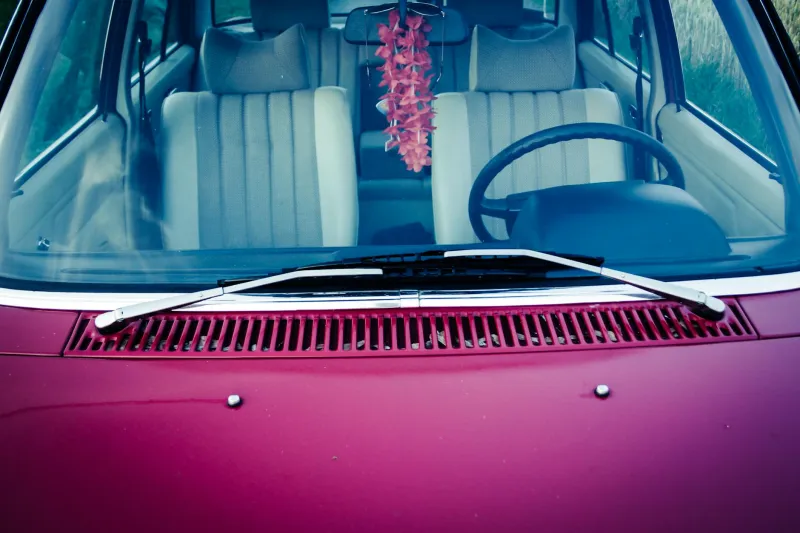
Step into any American car built before 1985, and you'd find something that seems almost alien today: a front seat designed like a sofa. The bench seat stretched uninterrupted from door to door, upholstered in vinyl or cloth, wide enough for three adults to sit shoulder-to-shoulder. This wasn't a cost-cutting measure or design oversight—it was intentional engineering that reflected how Americans thought about cars and the people inside them.
The bench seat made every car a social space. Dad drove with Mom beside him and Junior squeezed in between, or three teenagers could pile into the front for a trip to the drive-in. The driver's girlfriend could slide across the seat to sit close enough for his arm to rest naturally around her shoulders. These weren't cramped compromises—they were designed accommodations for human intimacy and flexibility.
Engineering Intimacy
Detroit's automakers understood something we've forgotten: cars weren't just transportation devices, they were America's most private public spaces. Young couples conducted entire relationships across those wide front seats. Families stayed connected during long drives instead of isolating in separate bucket seat pods. Even strangers sharing rides—common during gas shortages—could maintain comfortable conversation without shouting across a center console.
The bench seat's design reflected optimism about human nature. It assumed people wanted to sit close together, that physical proximity enhanced rather than threatened the driving experience. The wide, flat surface could accommodate sleeping passengers on long trips, serve as a changing table for babies, or provide space for the family dog to curl up between destinations.
The Invasion of the Center Console
Sometime in the 1980s, American automakers decided that what drivers really needed wasn't more space for people, but more space for stuff. The center console—initially a luxury feature in sports cars—began migrating into family vehicles. Suddenly, that social front seat was bisected by a plastic mountain housing cup holders, storage compartments, and eventually, elaborate infotainment systems.
This wasn't driven by safety concerns or engineering necessity. It was a response to changing American lifestyles. As cars became primarily commuter vehicles rather than family transportation, the bench seat's social advantages seemed less important than providing dedicated space for coffee cups, cell phones, and fast food. We traded human connection for beverage convenience.
The Bucket Seat Takeover
Bucket seats promised individual comfort and sporty aesthetics, but they fundamentally altered the car's social dynamics. Instead of one shared space, the front of the car became two separate territories. The passenger couldn't slide over to sit close to the driver. Three people couldn't squeeze in during emergencies. The car's interior became a collection of individual pods rather than a communal space.
This shift reflected broader changes in American culture. As we became more individualistic, our cars followed suit. The bench seat's assumption that people wanted to share space began to feel outdated. Privacy and personal space became more valuable than flexibility and intimacy.
Cup Holders Conquered America
Perhaps nothing symbolizes this transformation better than the modern obsession with cup holders. Today's cars feature enough cup holders to accommodate a small coffee shop, each one perfectly sized for specific beverage containers. This represents a complete philosophical reversal: instead of designing cars around human relationships, we now design them around our relationship with consumer products.
The center console became a shrine to American consumption habits—spaces for phones, coins, sunglasses, garage door openers, and multiple beverages per person. What once was human space became retail space, reflecting our evolution from a society that prioritized human connection to one that prioritizes convenience and consumption.
Safety's Convenient Excuse
As airbags became mandatory, automakers cited safety concerns about bench seats, claiming bucket seats provided better protection in crashes. While there's some truth to this, it's worth noting that engineers could have designed safe bench seats—they simply chose not to. Safety became a convenient justification for a change already driven by market preferences for individual comfort over shared space.
The real safety issue wasn't the bench seat itself, but the lack of seat belts and proper restraint systems. Once those problems were solved, the bench seat could have remained a viable option. Instead, we used safety as an excuse to eliminate a feature that no longer matched our social priorities.
What Three Across Really Meant
The bench seat's disappearance represents more than automotive design evolution—it reflects our transformation from a communal to an individualistic society. Those wide front seats weren't just furniture; they were enablers of human connection. They forced us to negotiate shared space, to be physically close to other people, to experience travel as a collective rather than individual activity.
Today's car interiors, with their bucket seats, center consoles, and individual climate controls, perfectly mirror our broader social isolation. We've gained comfort and convenience while losing the forced intimacy that made car travel a fundamentally social experience.
The Lost Art of Sitting Close
Young people today have never experienced the simple pleasure of sliding across a front seat to sit closer to someone they care about. They've never had to negotiate space with siblings during long trips or experienced the democratic equality of three people sharing one continuous seat. These small losses add up to a fundamental change in how we relate to each other and to the spaces we share.
The bench seat's death wasn't mourned because we didn't realize what we were losing until it was gone. In gaining cup holders and individual comfort, we lost something irreplaceable: the assumption that being close to other people was more important than being comfortable alone.