The Sound of Silence
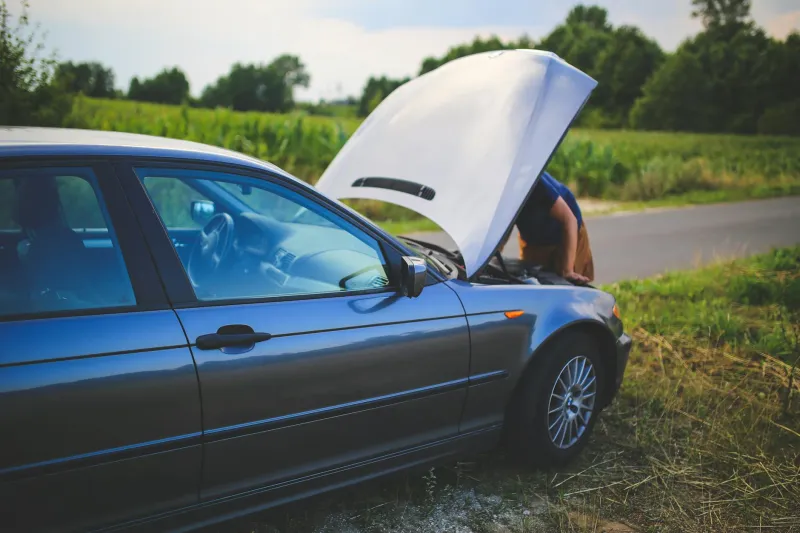
Picture this: it's 1979, and your Buick starts making that grinding noise somewhere outside Flagstaff, Arizona. The temperature gauge climbs into the red zone, steam pours from under the hood, and you coast to a stop on the shoulder of a lonely stretch of highway. You turn off the engine, step outside, and face a reality that's almost incomprehensible to modern travelers: you are genuinely, completely alone.
No phone to call for help. No GPS to pinpoint your exact location. No app to summon a tow truck. Just you, your broken car, and the vast American landscape stretching endlessly in every direction. This wasn't an inconvenience—it was a survival situation that required genuine resourcefulness and often, pure luck.
The Walking Dead
When your car died on a remote highway, your first decision was simple but potentially life-threatening: stay with the vehicle or start walking. Both choices carried serious risks. Staying put meant hoping someone would eventually notice you and stop to help—assuming they were friendly and actually capable of assistance. Walking meant abandoning your shelter and supplies to search for the mythical "nearest town" that might be five miles away or fifty.
Smart travelers carried emergency supplies that seem quaint by today's standards: flares, reflective triangles, a gallon of water, and a sleeping bag. The truly prepared kept a CB radio, though its usefulness depended entirely on whether any truckers were monitoring the emergency channel in your particular middle-of-nowhere location.
The Kindness of Strangers
Your survival often depended on the willingness of complete strangers to help someone in distress. This created a unique form of highway social contract—most drivers understood that they might be the stranded person next week, so they stopped to assist when they could. This wasn't always altruistic; it was practical insurance against their own future emergencies.
The typical rescue scenario involved flagging down a passing motorist, explaining your situation, and hoping they'd drive you to the nearest town with a gas station or auto parts store. Sometimes you'd get lucky and encounter a Good Samaritan with mechanical knowledge and basic tools. More often, you'd find yourself riding with strangers to unfamiliar towns, completely dependent on their honesty and good intentions.
The Parts Odyssey
Once you reached civilization, the real adventure began: finding replacement parts for your specific make and model in a small town that might have one auto parts store with limited inventory. If they didn't stock your alternator or water pump, you'd have to order it—a process that could take anywhere from overnight to a full week, depending on how remote your breakdown location was and how common your vehicle happened to be.
This meant finding accommodation in towns you'd never heard of, eating at diners you'd never planned to visit, and often discovering that your emergency cash reserves weren't quite as generous as you'd imagined. Some travelers ended up working temporary jobs to pay for extended stays while waiting for parts to arrive via Greyhound bus or freight delivery.
The Motel California Experience
Small-town motels became temporary homes for stranded travelers, creating a unique subculture of people stuck between destinations. These establishments often became informal information centers where fellow breakdown victims shared advice about local mechanics, parts suppliers, and the most reliable tow truck operators.
Motel managers developed expertise in automotive emergencies, keeping lists of trustworthy mechanics and parts stores. Some even offered discounted rates for stranded travelers, understanding that a broken-down motorist represented a captive customer who might be staying for several days rather than the usual one night.
Mechanical Roulette
Finding a competent mechanic in an unfamiliar town was pure gambling. You'd ask locals for recommendations, but their standards might be very different from yours. The "best mechanic in town" might be excellent by local standards but completely overwhelmed by your particular problem. Worse, some unscrupulous shops saw stranded travelers as easy targets for inflated prices and unnecessary repairs.
This created a perverse incentive system where being obviously from out of town—license plates, accent, or simply looking lost—could double your repair costs. Smart travelers learned to research local mechanics before trips, but that only worked if you broke down near your planned route.
The Phone Booth Lifeline
Pay phones represented your only connection to the outside world, but they came with their own complications. You needed exact change, working phones were surprisingly rare on remote highways, and long-distance calls to arrange parts delivery or contact family could quickly exhaust your coin supply.
Many breakdown stories included desperate searches for working pay phones, negotiations with gas station attendants for change, and careful rationing of phone time to handle multiple necessary calls. The simple act of letting your family know you were safe and delayed could become a logistical challenge requiring planning and luck.
The Tow Truck Lottery
Towing services operated very differently in the pre-digital era. Instead of GPS-enabled dispatch systems, you'd call a local number and hope someone was available, willing to drive to your location, and capable of handling your specific vehicle. Tow truck operators often worked part-time, meaning you might wait hours for someone to become available.
Pricing was completely arbitrary and often negotiated on the spot. A driver might quote one price over the phone and demand more upon seeing your out-of-state plates or assessing your desperation level. You had virtually no recourse—accept their terms or remain stranded.
Digital Rescue Revolution
Today's breakdown experience—calling AAA from your smartphone, watching your tow truck approach on GPS, researching nearby hotels and restaurants while you wait—would seem like magic to a 1979 traveler. We've eliminated an entire category of genuine adventure and replaced it with managed inconvenience.
Modern roadside assistance apps connect you instantly to vetted service providers with transparent pricing and real-time tracking. Your exact location is pinpointed automatically, your service history is instantly available, and you can arrange alternative transportation without leaving your air-conditioned car.
What We've Lost in Translation
Yet something valuable disappeared with that old system's genuine danger and uncertainty. The forced interactions with helpful strangers. The discovery of unexpected towns and local characters. The development of genuine self-reliance and problem-solving skills. The appreciation for human kindness when you desperately needed it.
Breaking down used to be a story worth telling—a genuine adventure that revealed character and created unexpected memories. Now it's just a temporary inconvenience, quickly resolved and immediately forgotten. We've gained security and efficiency while losing the authentic human drama that once made every long-distance drive a potential epic tale.