When Cars Were Just Rooms That Moved
Imagine loading your kids into the car today and letting them sprawl across the back window shelf, sit on your lap while you drive, or curl up for a nap in the cargo area. The very thought would horrify modern parents and likely result in a visit from child protective services. But for generations of American families, this was simply how children rode in cars—and nobody thought twice about it.
The transformation of automotive child safety represents one of the most dramatic shifts in American parenting culture. What once seemed perfectly normal now appears shockingly reckless, revealing just how fundamentally our understanding of risk, responsibility, and child welfare has evolved over the past fifty years.
The Backseat Olympics
Before the era of mandatory car seats and seatbelt laws, the family car was essentially a mobile playground. Children would climb over seats, lie down across the back window shelf to watch clouds, or create elaborate games that involved constant movement throughout the vehicle. The bench seats of 1960s cars were perfect for stretching out, and the spacious interiors of station wagons became miniature living rooms on wheels.
Parents actively encouraged this freedom of movement. Long road trips were made bearable by allowing kids to change positions, play games that required space to move around, and even take naps wherever they could get comfortable. The back window shelf was a particularly popular spot—offering kids a unique view of the world behind them and parents a blessed period of quiet.
Sibling dynamics played out differently when children weren't confined to specific seats. Brothers and sisters would negotiate territory, create temporary boundaries, and develop elaborate rules for sharing space. The phrase "Don't make me come back there" had real meaning when parents could actually turn around and physically intervene in backseat disputes.
The Lap Riding Generation
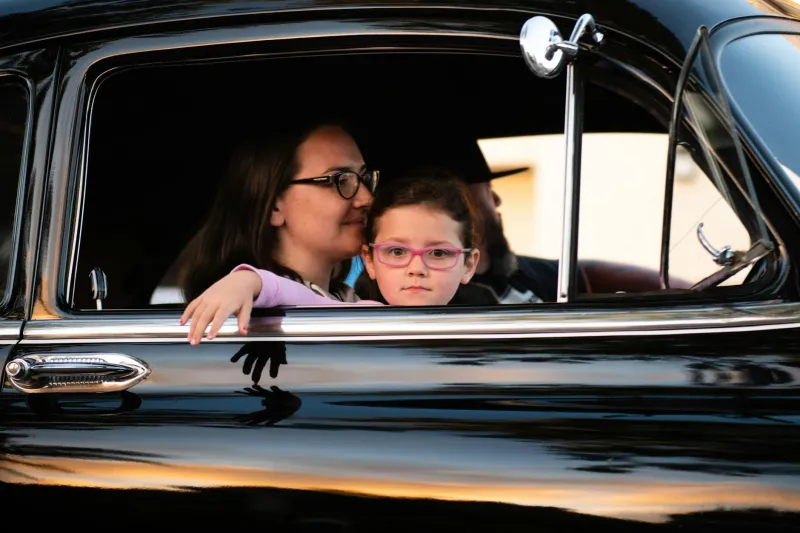
Perhaps most shocking to modern sensibilities was the casual acceptance of children riding on adults' laps, especially in the front seat. This wasn't limited to emergency situations or short trips around the block—families would drive hundreds of miles with toddlers perched on mom's lap or older children sharing dad's seat behind the steering wheel.
This practice was so common that car manufacturers actually designed features to accommodate it. Some vehicles included fold-down armrests that could serve as makeshift seats for small children, and bench seats were specifically engineered to fit multiple people comfortably. The idea that a child needed their own dedicated, secured seating position simply didn't exist.
The front seat was considered prime real estate for children, offering the best view and the most interaction with parents. Kids would stand on the bench seat, faces pressed against the windshield, calling out landmarks and asking endless questions about the journey ahead. This close proximity was seen as beneficial for family bonding, not dangerous for child safety.
Cargo Area Camping
Station wagons and early SUVs featured large cargo areas that became natural play spaces for children on long trips. Families would fold down the rear seats, throw in some blankets and pillows, and create a mobile bedroom where kids could play games, read books, or sleep comfortably. This "way back" seating was often the most coveted spot in the vehicle, offering the most space and freedom of movement.
Parents saw this arrangement as practical and comfortable for children, who could stretch out fully and entertain themselves during long drives. The cargo area became a contained space where kids could be kids without bothering the adults up front. Some families even installed custom seating or sleeping platforms in their cargo areas, creating elaborate mobile bedrooms for cross-country adventures.
The popularity of cargo area seating led to the development of rear-facing third-row seats in some station wagons, allowing children to wave at following traffic and watch the world recede behind them. These seats, which would be considered death traps by modern safety standards, were marketed as fun features that kids would love.
The Economics of Casual Safety
The financial implications of this casual approach to child passenger safety were significant. Families didn't need to budget for car seats, booster seats, or safety equipment that would need to be replaced as children grew. A single vehicle could accommodate any number of children of any age without additional purchases or modifications.
This economic freedom extended to vehicle choice as well. Parents could select cars based on style, performance, or fuel economy without considering safety ratings, car seat compatibility, or child-specific features. The idea that child safety considerations should influence major purchase decisions was completely foreign to most families.
Insurance companies reflected this casual attitude toward risk in their policies and pricing. Automotive insurance was primarily concerned with property damage and adult injuries—child passenger safety wasn't even a category of coverage. Liability concerns related to child passengers were virtually nonexistent, and lawsuits related to child automotive injuries were rare and generally unsuccessful.
The Awakening
The transformation began in the 1960s as medical professionals started documenting the devastating effects of automotive accidents on children. Pediatric emergency rooms were seeing increasing numbers of severe injuries that could have been prevented with proper restraints. The development of crash test technology revealed just how vulnerable unrestrained children were in even minor accidents.
Early child safety advocates faced significant resistance from parents who viewed car seats and restraints as unnecessary and restrictive. The idea that children needed to be confined to specific seats seemed to contradict prevailing notions of childhood freedom and family togetherness. Many parents worried that safety equipment would make car rides less enjoyable for children and more stressful for families.
The first child safety laws were met with widespread skepticism and resistance. Parents argued that they had grown up riding freely in cars without incident, and that modern safety concerns were overblown. The transition from voluntary to mandatory child restraints took decades and required extensive public education campaigns to change deeply ingrained cultural attitudes.
The Modern Fortress
Today's approach to child passenger safety would be incomprehensible to parents from previous generations. Children are secured in age-appropriate restraints until they're tall enough for regular seatbelts, usually around age 8-10. Rear-facing car seats are recommended until age 2, and booster seats are required until children reach specific height and weight thresholds.
Modern vehicles are designed around child safety considerations. Rear seats include LATCH systems for secure car seat installation, side-impact airbags provide additional protection, and electronic stability systems help prevent the types of accidents that once resulted in serious child injuries. The casual mobility that once characterized childhood car rides has been replaced by a fortress of safety equipment and regulations.
The financial investment in child passenger safety has become substantial. Families routinely spend hundreds or even thousands of dollars on car seats, booster seats, and safety equipment that must be replaced as children grow. Vehicle selection is heavily influenced by safety ratings, car seat compatibility, and child-friendly features.
Measuring Progress
The statistics tell a clear story: automotive child fatalities have dropped dramatically since the implementation of modern safety standards. Children who once faced significant risk of serious injury in minor accidents are now protected by multiple layers of safety equipment and regulations. The casual acceptance of risk that once characterized American family driving has been replaced by evidence-based safety protocols.
Yet something has been lost in this transformation. The freedom of movement, the family intimacy, and the sense of adventure that once defined childhood car rides have been sacrificed for safety and security. Modern children experience car travel as a more constrained, individual activity, missing out on the social dynamics and physical freedom that previous generations took for granted.
The evolution of child passenger safety reflects broader changes in American culture—from a society that accepted risk as part of life to one that seeks to eliminate danger through regulation and technology. This transformation has undoubtedly saved lives and prevented injuries, but it has also fundamentally changed the experience of childhood and family travel in ways that extend far beyond simple safety considerations.