When Getting Legal Meant Getting Lucky
Every spring, millions of Americans face the same ritual: the dreaded vehicle inspection. Today, it's a standardized process involving computer diagnostics, emissions testing, and strict safety protocols. But there was a time when getting your inspection sticker was less about your car's actual condition and more about your relationship with the guy behind the wrench.
In the 1960s and 70s, state vehicle inspection programs were a patchwork of local interpretations, personal relationships, and wildly inconsistent standards. What passed in rural Montana might fail spectacularly in suburban New Jersey, and sometimes the difference between a pass and fail came down to whether your mechanic had had his morning coffee.
 Photo: New Jersey, via images.unsplash.com
The Neighborhood Advantage
Before computerized testing equipment and standardized checklists, vehicle inspections were deeply human affairs. Your local garage owner—let's call him Frank—knew your car, your family, and your financial situation. When inspection time rolled around, Frank would pop the hood, kick the tires (sometimes literally), and make a judgment call about whether your vehicle was safe enough for another year on the road.
This personal touch had its advantages. Frank understood that the single mother down the street couldn't afford new brake pads right before Christmas, so maybe those pads had another month or two left in them. He knew that the college kid's rusty exhaust pipe wasn't going to fall off before graduation. Frank's inspection wasn't just about mechanical compliance—it was about community understanding.
The inspection process itself was refreshingly straightforward. No appointment necessary, no waiting in sterile service centers, no computer printouts full of incomprehensible codes. You'd drive up to Frank's garage, he'd spend fifteen minutes looking over your car, and you'd either drive away with a fresh sticker or a handwritten list of things to fix.
The Wild West of Standards
What made this system truly fascinating was how dramatically standards varied from place to place. Some states barely had inspection programs at all, while others took a more aggressive approach. Even within the same state, different counties might interpret the same regulations completely differently.
A car that failed inspection in one town might pass with flying colors twenty miles down the road. This led to a cottage industry of "inspection shopping," where savvy drivers would seek out the most lenient mechanics in their area. Word would spread through communities about which garages were "easy" and which ones were "tough."
The inspection criteria themselves were often vague and open to interpretation. "Adequate braking" could mean anything from "stops eventually" to "stops on a dime." "Functional steering" might be interpreted as "doesn't require both hands and a prayer to make a turn." These gray areas gave mechanics enormous discretion in determining what constituted roadworthy.
The Corruption Nobody Talked About
With such subjective standards and personal relationships came inevitable opportunities for abuse. The inspection sticker became a form of local currency, traded for favors, friendship, or sometimes just cold hard cash. Stories circulated about mechanics who would pass anything for the right price, or conversely, who would fail perfectly good cars belonging to people they didn't like.
This wasn't necessarily organized corruption—often it was just small-town politics playing out in automotive form. The mechanic who also served on the town council might be a little more generous with inspection stickers during election season. The garage owner who'd had a falling out with a neighbor might suddenly develop very strict safety standards.
Consumer protection was virtually nonexistent. If your car failed inspection, you had little recourse beyond finding another mechanic willing to take a second look. There were no standardized appeal processes, no regulatory oversight, and no way to verify whether a failure was legitimate or personal.
The Technology Revolution
The transformation began in the 1980s as environmental concerns drove the development of emissions testing programs. Suddenly, inspections weren't just about whether your brakes worked—they were about whether your car was poisoning the air. This required sophisticated testing equipment that couldn't be fooled by a friendly smile or a twenty-dollar bill.
Computer diagnostics revolutionized the entire process. Modern cars began talking to inspection computers, reporting their own problems through diagnostic codes that left little room for interpretation. The personal relationship between driver and mechanic became irrelevant when a computer screen displayed exactly which systems were failing.
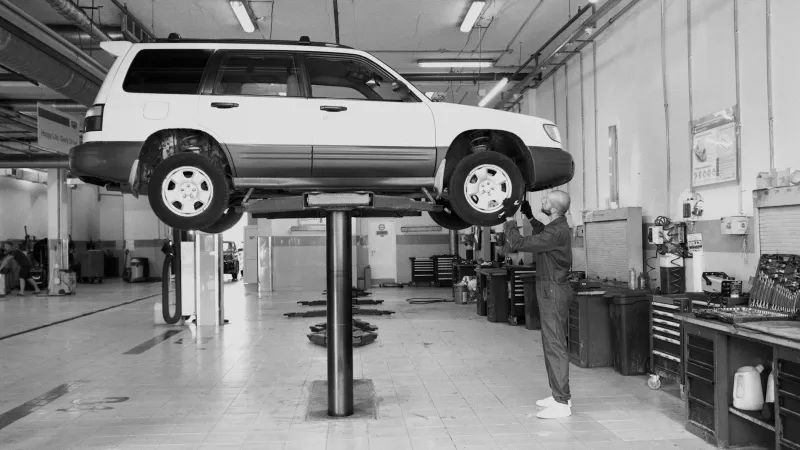
Today's inspection stations look more like medical laboratories than old-fashioned garages. Emissions testing involves inserting probes into tailpipes and connecting computers to diagnostic ports. Safety inspections follow detailed checklists with specific measurements and tolerances. Everything is documented, photographed, and stored in state databases.
The Price of Standardization
This evolution toward standardized, technology-driven inspections has undoubtedly made the roads safer and the air cleaner. Modern inspection programs catch problems that might have been overlooked or ignored in the old system. Consumer protection has improved dramatically, with clear standards and appeal processes for disputed failures.
But something has been lost in this transformation. The personal touch, the community understanding, and the flexibility to consider individual circumstances have all been sacrificed on the altar of consistency and accountability. Today's inspection process is fair and objective, but it's also cold and impersonal.
The neighborhood mechanic who knew your car's quirks and your family's situation has been replaced by technicians following computerized protocols. There's no room for judgment calls, no consideration of special circumstances, and no opportunity for the kind of community-based problem-solving that once characterized vehicle inspections.
Lessons in Trust and Technology
The evolution of vehicle inspection programs reflects broader changes in American society. We've traded personal relationships for standardized processes, local discretion for centralized control, and human judgment for computer algorithms. These changes have brought real benefits in terms of safety, environmental protection, and consumer rights.
Yet the old system, for all its flaws, represented something valuable: a time when communities took care of their own, when personal relationships mattered more than regulatory compliance, and when getting your car inspected was as much about social interaction as mechanical evaluation. In our rush toward technological perfection, we've gained efficiency and lost humanity—a trade-off that defines much of modern American life.