Handshake Deals and Paper Napkin Negotiations: When Car Crashes Were Settled Street-Side
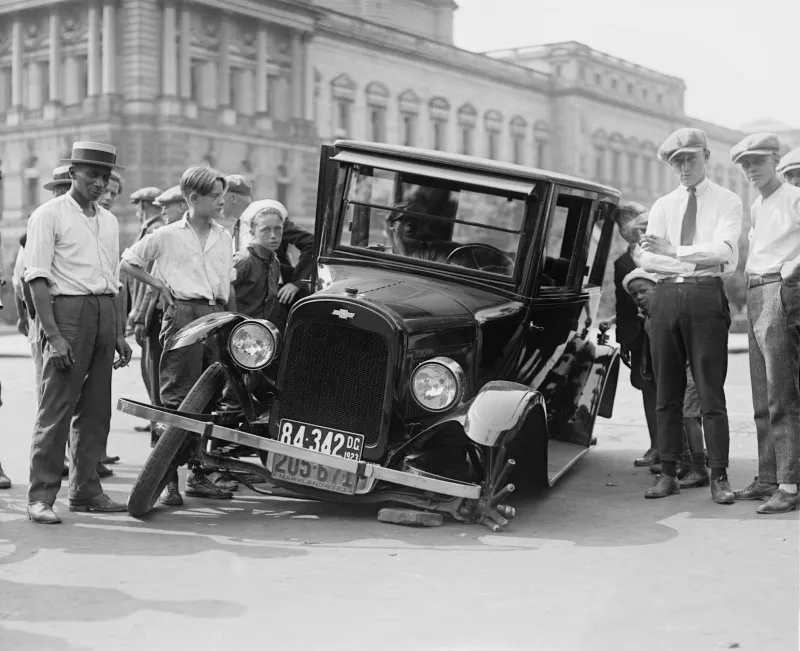
Picture this: It's 1987, and you've just rear-ended someone at a red light in downtown Denver. No big deal, right? Just a little paint swap between bumpers. But here's what happened next that would seem absolutely insane to drivers today.
You both pull over. You walk around your cars together, pointing at the damage. One of you pulls out a pen and starts writing on whatever scrap of paper you can find — maybe a fast-food napkin, maybe the back of a gas receipt. You exchange names, addresses, and phone numbers. You shake hands. You drive away.
That's it. No photos. No police report for minor damage. No insurance companies called from the scene. Just two strangers trusting each other to handle things honestly later.
The Honor System Highway
For decades, minor car accidents in America operated on what was essentially an honor system. Drivers carried little cards in their wallets with instructions on what information to exchange, but the whole process relied on people being truthful about what happened, who they were, and whether they'd actually follow through on paying for repairs.
Think about how wild that really was. You'd hand over your real name and address to a complete stranger, trusting they wouldn't show up at your house later. You'd take their word that they had insurance, that the phone number they gave you actually worked, and that they'd tell their insurance company the same story they just told you.
Many drivers kept small disposable cameras in their glove compartments for serious accidents, but for minor fender benders? You relied on your memory and hoped for the best. Some people sketched little diagrams on napkins showing how the cars hit. Others just trusted that everyone would remember things the same way when the insurance companies called.
When Your Word Was Your Bond
The craziest part wasn't the lack of technology — it was how often this system actually worked. Most people did follow through. They called their insurance companies, told the truth about what happened, and paid up when they were at fault. The social contract of the road was stronger then, maybe because getting caught in a lie had bigger consequences in smaller communities.
Sure, some people gave fake names or disconnected phone numbers. Some drove away from accident scenes hoping the other driver wouldn't bother pursuing it. But these were considered serious character flaws, the kind of thing that would follow you around a small town for years.
Insurance fraud existed, but it was harder to pull off when you had to look someone in the eye and lie to their face. There was something about that face-to-face interaction that kept most people honest, even when money was on the line.
The Technology Revolution
Fast-forward to today, and the entire process has been transformed into a digital evidence-gathering operation. Modern drivers don't just exchange information — they create comprehensive legal documentation right there on the street.
Every smartphone becomes a crime scene photographer. Drivers snap pictures of damage from twelve different angles, capture license plates, document street signs and traffic signals. They use apps that automatically record GPS coordinates, weather conditions, and exact timestamps. Some cars now have built-in cameras that automatically save footage when they detect an impact.
Insurance companies have apps that let you file claims instantly from the accident scene. You can upload photos, submit statements, and even get preliminary damage estimates before the tow truck arrives. Some insurers use telematics data from your car to verify what happened, cross-referencing your account with actual vehicle data about speed, braking, and impact force.
The Trust Factor
What we've gained in accuracy and fraud prevention, we've lost in human connection. Modern accident scenes feel more like insurance investigations than neighborly misunderstandings. Drivers stand apart, focused on their phones, building cases against each other rather than working together to solve a problem.
The old system required trust, but it also built trust. When someone kept their word about paying for your repairs, it reinforced your faith in people. When neighbors helped as witnesses or offered to testify about what they saw, it strengthened community bonds.
Today's system is undeniably better at preventing fraud and ensuring fair outcomes. But something intangible was lost when we stopped looking each other in the eye and shaking hands after a fender bender.
The Real Cost of Progress
Modern accident handling is faster, more accurate, and more fair. Insurance companies can process claims in days instead of weeks, and drivers get more reliable outcomes. GPS data and photos eliminate most disputes about what actually happened.
But we've also created a world where every minor mishap becomes a potential legal battle. Where drivers immediately assume the worst about each other's intentions. Where a simple mistake requires lawyers, adjusters, and digital forensics to resolve.
The handshake deals of the past weren't perfect, but they reflected a time when Americans trusted each other enough to work things out face-to-face. When your word meant something, and when most people believed that strangers would do the right thing.
That trust didn't disappear because technology got better. It disappeared because we stopped practicing it, one fender bender at a time.