Your Local Oracle Behind the Pump: When Gas Station Attendants Were America's Original Search Engine
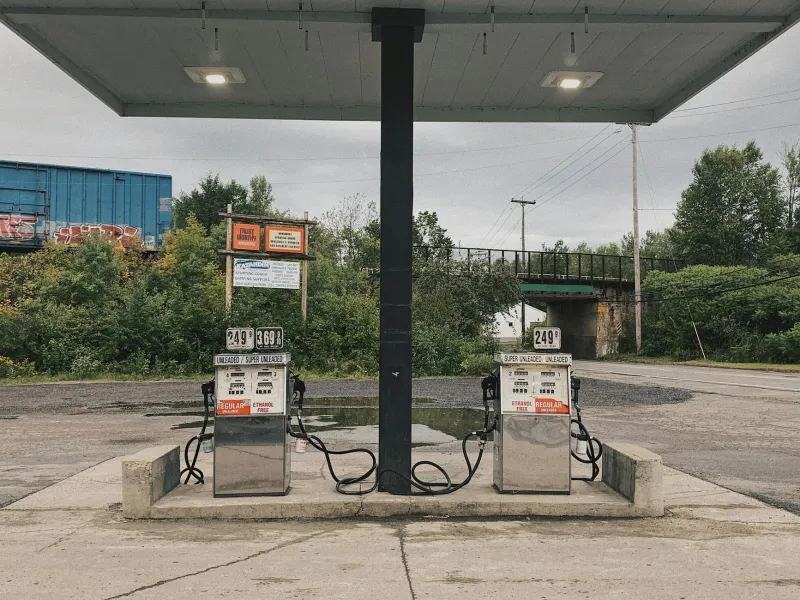
The Human GPS Network
Pull into any gas station in 1975, and you'd encounter something that seems almost quaint today: a person who actually knew things about the area. Not just where the restrooms were, but which highway construction would add two hours to your drive to Denver, which diner down the road served coffee worth stopping for, and whether that storm brewing on the horizon was heading your way or moving east.
The gas station attendant wasn't just there to pump fuel and clean windshields. They were the local information broker, the unofficial chamber of commerce representative, and your personal travel concierge all wrapped up in a company uniform. Every station became a mini visitor center, staffed by someone who'd lived in the area long enough to know which shortcuts actually saved time and which ones would leave you stranded on a dirt road.
More Than Just Directions
These weren't casual recommendations either. Station attendants took pride in their local expertise. They knew which motels had clean rooms and fair prices, which mechanics wouldn't overcharge a traveler in distress, and which routes to avoid during hunting season or after a heavy rain. Ask about a good place for lunch, and you'd get a detailed dissertation on the merits of Mary's Diner versus the truck stop two exits down.
The relationship went both ways. Regular customers would stop by just to chat, sharing news from their travels and picking up updates on local happenings. Truckers would relay road conditions from hundreds of miles away, creating an informal but remarkably effective communication network that stretched across the entire interstate system.
The Weather Station Connection
Before weather apps delivered hourly updates to your pocket, gas stations served as unofficial meteorological centers. Attendants monitored local radio stations, watched the sky, and collected reports from drivers coming from different directions. They could tell you if that line of dark clouds meant you should wait it out or if you could outrun it to the next town.
This weather wisdom often proved more accurate than official forecasts because it came from people actually experiencing conditions on the ground. A station attendant might warn you about black ice forming on a particular bridge or advise you to take the southern route because fog was rolling in from the coast.
The Lost Art of Local Knowledge
What made these interactions so valuable wasn't just the information itself, but the context that came with it. A smartphone can tell you there's a restaurant three miles ahead, but it can't tell you that the owner's wife makes the best apple pie in three counties, or that they close early on Sundays during football season, or that the parking lot floods when it rains hard.
Station attendants possessed what we'd now call hyperlocal intelligence. They knew the quirks, the exceptions, and the unwritten rules that made the difference between a smooth journey and a frustrating detour. This knowledge was earned through years of living in one place and talking to thousands of travelers passing through.
The Silent Transaction Era
Today's Frictionless Fuel Stops
Contrast that rich information exchange with a modern gas station visit. Swipe your card, pump your gas, grab a drink from the cooler, and you're back on the road without speaking to another human being. The entire transaction can happen in complete silence, mediated by screens and automated systems.
Our phones now provide turn-by-turn navigation, real-time traffic updates, restaurant reviews, and weather forecasts. We can plan entire cross-country trips without ever asking another person for advice. The efficiency is undeniable, but something fundamental has been lost in the process.
The Information Revolution's Trade-offs
This shift represents more than just technological progress—it's a complete restructuring of how we gather and process information while traveling. Instead of relying on human connections and local expertise, we've outsourced our travel intelligence to algorithms and crowd-sourced reviews.
The old system had its limitations, certainly. Station attendants could be wrong, biased, or simply unavailable when you needed them. But they offered something our digital tools can't replicate: genuine human interaction and the kind of serendipitous discoveries that happen when you ask a real person for advice.
What We've Gained and Lost
Today's travel technology is undeniably superior in terms of accuracy, availability, and scope. Your phone knows about every restaurant, every hotel, and every point of interest along your route. It updates constantly and never takes a lunch break.
But we've traded the warmth of human connection for the cold efficiency of data. We've exchanged the possibility of unexpected discoveries for the certainty of algorithmic recommendations. The gas station attendant who might have told you about the hidden waterfall just off the highway has been replaced by a GPS that knows only the fastest route from point A to point B.
The corner gas station once served as America's original networking hub, connecting travelers to places and people in ways that enriched the journey itself. Now our fuel stops are just that—quick, efficient, and utterly forgettable interruptions in our digitally guided travels.