Pull Up, Sit Back, and Let Someone Else Handle It: The Lost Art of the Full-Service Gas Station
Pull Up, Sit Back, and Let Someone Else Handle It: The Lost Art of the Full-Service Gas Station
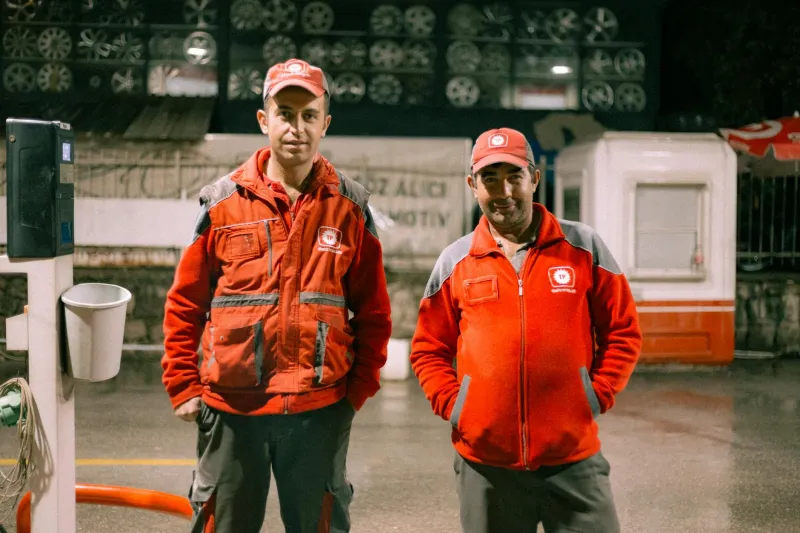
Picture this: you pull into a gas station somewhere in suburban Ohio in 1962. Before your engine has even finished ticking, a young guy in a pressed uniform is already at your window. He asks how much you want, starts the pump, and without being asked, lifts your hood to check the oil. His colleague is already working a squeegee across your windshield. Someone else is crouched at your tires with a pressure gauge. You haven't moved an inch, and in three minutes, your car is better than when you arrived.
That wasn't a luxury car service. That was just a Tuesday at your local Texaco.
When a Gas Station Was Actually a Service Station
The full-service era — roughly the 1940s through the mid-1970s — operated on a premise that sounds almost radical today: that buying gasoline entitled you to actual human attention. The term "service station" wasn't marketing language. It was a job description.
Attendants were trained, often uniformed, and expected to perform a checklist of tasks with every fill-up. Windshield cleaning was standard. Oil and fluid checks were routine. Tire pressure inspections happened without prompting. At many stations, you'd walk away with a free road map tucked under your arm, compliments of the oil company whose brand hung above the pumps.
The big names — Shell, Gulf, Standard Oil, Esso — competed fiercely on service, not just price. A station's reputation in a town depended heavily on how well its attendants treated the cars that pulled in. Hiring, training, and retaining good help was a real business concern. These weren't faceless franchises. Many were family-owned operations where the guy checking your oil had probably also gone to school with your kids.
The Economics Behind the White Gloves
How did stations afford all that labor? The math worked differently then. Gasoline profit margins were thin even in the '50s, but service stations made serious money on repairs, oil changes, and parts. The pumps were essentially a traffic driver — a way to get cars into the lot so the mechanics in the bays could get to work.
The attendant out front wasn't just being polite. He was also your first line of diagnosis. If he noticed your belt looked worn or your coolant was low, that was a potential repair ticket. Service and sales were woven together in a way that made the whole operation sustainable.
That model held up reasonably well until the 1970s energy crisis scrambled everything. Fuel shortages, spiking prices, and thin margins forced station owners to rethink the economics fast. Self-serve pumps — already legal in most states by then — suddenly made a lot more sense. Labor costs dropped. Throughput increased. Prices could be held a few cents lower.
By the early 1980s, the full-service lane was becoming a relic. In most parts of the country, it disappeared entirely.
What the Modern Gas Stop Actually Looks Like
Today, the average American gas station experience takes roughly four minutes and involves zero human beings. You tap your card, select your grade, lift the handle, and stare at a small screen trying to skip the advertisements. The only decision is whether you want a receipt.
Inside, there might be a cashier behind bulletproof glass selling lottery tickets and energy drinks. The repair bays, if they exist at all, are usually a quick-lube chain operating under a separate brand. Nobody knows your name. Nobody checks your oil. Nobody hands you a map of Tennessee.
Convenience stores attached to gas stations are now a $680 billion industry in the United States, according to the National Association of Convenience Stores — but almost none of that revenue comes from vehicle service. It comes from coffee, snacks, and cigarettes. The "service" in service station has been quietly retired.
Did We Lose Something We Didn't Know We Had?
It's easy to frame the shift as pure progress. Self-serve is faster, cheaper per gallon, and available at 2 a.m. without staffing concerns. Nobody misses waiting while an attendant slowly works through a checklist when you're already running late.
But there's something worth sitting with here. The old service station model built micro-relationships into an otherwise forgettable errand. The attendant who noticed your tire was looking soft wasn't just saving you money — he was paying attention in a way that modern infrastructure simply doesn't. That kind of incidental care, baked into a routine transaction, is genuinely hard to replace.
And there's the mechanical awareness angle. When someone checked your oil every time you filled up, you knew what your oil looked like. You knew when your fluids were getting low. Many American drivers today have no idea what's under the hood, not because they're careless, but because the system no longer asks them to care.
Then, This, Now
The full-service gas station era wasn't perfect. Attendants were overwhelmingly male, stations were often segregated in the South, and the whole model depended on cheap labor that was never especially well compensated.
But the core idea — that a routine stop for fuel was also an opportunity to make sure someone's car was actually okay — reflected something genuine about how commerce and community used to intersect in American life.
We traded that for speed and a few cents off per gallon. Whether that was the right deal probably depends on how often your tire pressure warning light is currently on.