The Ritual That Defined Sundays
Every Sunday afternoon across America in 1958, a familiar scene played out in driveways from Maine to California. Dad would wash and wax the family sedan while Mom packed a thermos of coffee and maybe some sandwiches. The kids would pile into the back seat, and off they'd go—not to anywhere in particular, but simply to drive.
This wasn't unusual behavior. This was the Sunday drive, a weekly ritual as common as church attendance and nearly as sacred. For millions of American families, the Sunday afternoon drive represented freedom, family time, and the simple pleasure of being in motion without urgency or destination.
When Wandering Was the Point
The Sunday drive operated on a completely different logic than modern travel. There was no GPS calculating the most efficient route, no predetermined destination, no schedule to keep. Families would simply pick a direction—maybe toward the countryside, maybe through different neighborhoods, maybe along a scenic route they'd heard about—and see where the road took them.
The journey itself was the entertainment. Parents would point out interesting houses, farms, or landscapes. Kids would play car games, count different colored cars, or simply watch the world roll by. Conversations happened naturally, without the pressure of structured family time or the distraction of individual devices.
Sometimes these drives would last an hour; sometimes they'd stretch into the entire afternoon. The beauty was in the flexibility and spontaneity that came from having nowhere specific to be.
The Infrastructure of Aimless Travel
America's road system in the 1950s and 1960s was perfectly designed for this kind of purposeless exploration. Before the Interstate Highway System dominated long-distance travel, the country was crisscrossed with scenic two-lane highways that connected small towns, passed through farmland, and offered constantly changing views.
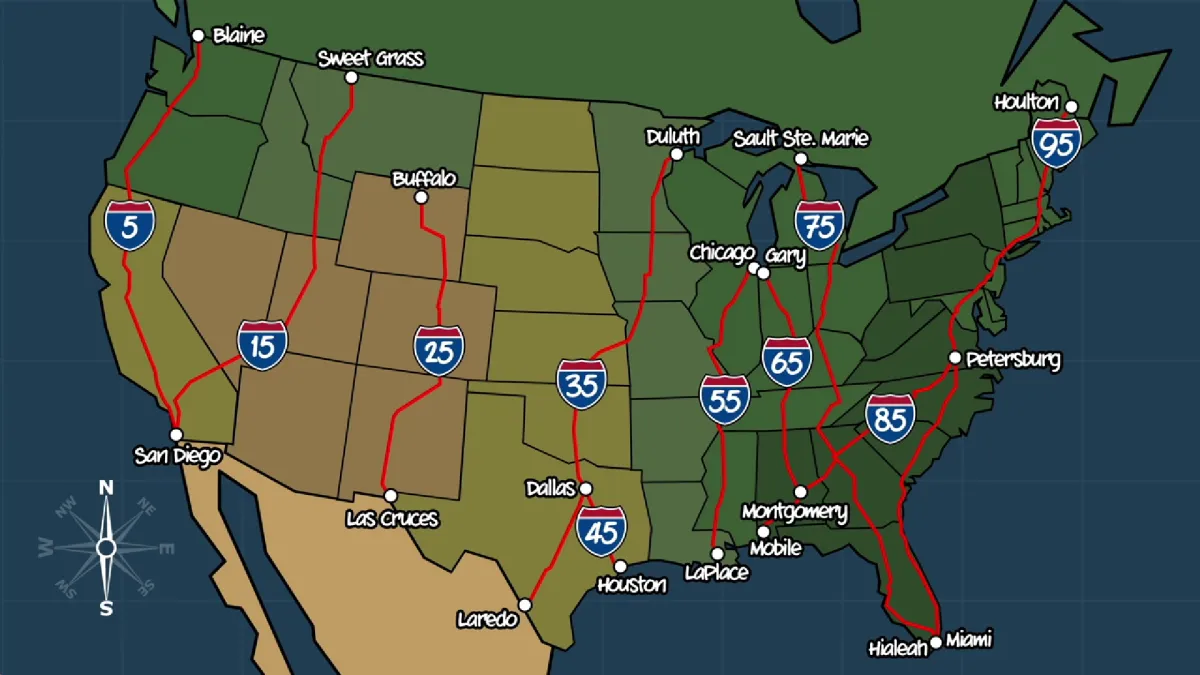 Photo: Interstate Highway System, via www.carscoops.com
These roads were built for driving, not just for getting from point A to point B as quickly as possible. They curved around natural features, passed through town centers, and offered plenty of places to stop for ice cream, roadside attractions, or simply to stretch your legs and admire a view.
Gas was cheap—around 30 cents a gallon—making the cost of aimless driving negligible. Cars were designed for comfort rather than efficiency, with bench seats that could accommodate the whole family and big windows that turned every drive into a mobile sightseeing tour.
The Social Dimension
The Sunday drive wasn't just about individual families; it was a shared cultural experience. On any given Sunday afternoon, country roads would be dotted with cars full of families on their weekly adventures. People would wave at each other, stop to help with car trouble, or strike up conversations at scenic overlooks.
This created a sense of community among strangers united by the simple act of being out for a drive. Rural areas, in particular, benefited economically from this tradition, as Sunday drivers would stop at roadside stands, small restaurants, and local attractions that might otherwise struggle to attract visitors.
The Economics of Leisure Driving
The Sunday drive represented a particular moment in American economic history when leisure time was expanding, car ownership was becoming universal, and gas was abundant and affordable. The post-war economic boom meant that families had both the disposable income and the free time to spend entire afternoons simply driving around.
This was also an era when entertainment options were more limited. With only three television networks and most businesses closed on Sundays, the Sunday drive filled a genuine need for family entertainment and recreation.
When Everything Changed
Several factors combined to kill the Sunday drive tradition. The 1973 oil crisis made gas expensive and turned fuel efficiency into a national concern. The completion of the Interstate Highway System channeled traffic onto high-speed, limited-access roads that were efficient for travel but terrible for leisurely exploration.
Most significantly, American culture shifted toward efficiency and productivity. The idea of spending time without a specific purpose began to feel wasteful. As work weeks became longer and family schedules more complex, the luxury of aimless Sunday afternoons disappeared.
The rise of suburban sprawl also changed the landscape available for Sunday drives. The scenic country roads that once lay just outside every city were increasingly replaced by strip malls, subdivisions, and commercial development that made aimless driving less pleasant and rewarding.
The GPS Revolution
Today's driving culture is fundamentally different. Every trip is optimized for efficiency, with GPS systems calculating the fastest route and providing turn-by-turn directions. The idea of getting lost—which was part of the adventure of the Sunday drive—has become something to be avoided at all costs.
Modern navigation systems have eliminated the possibility of serendipitous discovery that made Sunday drives special. When your phone knows exactly where you are and where you're going at all times, there's no room for the pleasant uncertainty that once defined leisure driving.
What We Lost
The death of the Sunday drive represents more than just a change in recreational habits. It reflects a broader cultural shift away from unstructured time and toward constant productivity and efficiency.
The Sunday drive provided something that's increasingly rare in modern life: time for families to be together without agenda, distraction, or pressure. It was meditation in motion, a chance to decompress from the week and reconnect with both family and landscape.
Perhaps most importantly, the Sunday drive cultivated a different relationship with place and geography. Families who regularly explored their region developed a deep, intuitive knowledge of local geography, seasonal changes, and community character that's impossible to gain from efficient, GPS-guided trips between specific destinations.
Signs of Revival
Interestingly, elements of the Sunday drive tradition are making a comeback in different forms. Scenic byway programs promote leisurely driving routes. Car enthusiast groups organize weekend drives through beautiful countryside. Some families are rediscovering the pleasure of unplanned exploration, often calling it "going on an adventure" rather than "going for a drive."
The COVID-19 pandemic, which limited other forms of entertainment while keeping car travel relatively safe, sparked renewed interest in driving for pleasure rather than purpose. Many families rediscovered the simple joy of getting in the car and seeing where the road leads.
The Deeper Loss
Ultimately, the disappearance of the Sunday drive reflects our culture's increasing difficulty with the concept of purposeless activity. In a world where every moment is supposed to be optimized, productive, or educational, the idea of spending time simply enjoying motion and scenery feels almost subversive.
But maybe that's exactly what we need to rediscover: the radical act of going nowhere in particular, just because we can.